

Licensed PE Day
Professional Engineers Day: What Being a PE Means to Palmer’s Engineers
Every year on Professional Engineers Day, observed this year on August 5, 2026, we recognize the licensed Professional Engineers (PEs) whose expertise, integrity, and commitment help protect the health, safety, and welfare of the public. Established by the National Society of Professional Engineers (NSPE), the day raises awareness about the vital role licensed engineers play in safeguarding the communities we serve while recognizing the professionals who uphold the highest standards of the engineering profession.
At Palmer, nearly 50 licensed Professional Engineers represent a wide range of disciplines and experience—from those who have held their licenses for more than three decades to those who have recently achieved this significant professional milestone. While each engineer's journey is unique, they all share a common commitment to serving others through safe, ethical, and thoughtful engineering.
A Tradition of Public Trust
Professional engineering licensure in the United States dates back to 1907, when Wyoming became the first state to establish a licensing law for engineers. Over the last century, licensure has become the recognized standard for demonstrating an engineer's competence, experience, and commitment to ethical practice. Today, more than 500,000 licensed Professional Engineers continue that tradition, designing and overseeing the infrastructure and systems that communities rely on every day while protecting the public's health, safety, and welfare.
If you'd like to learn more about the history of professional engineering licensure, the National Society of Professional Engineers offers an interesting look at how the profession has evolved over the past century.
Earning the PE Designation
Becoming a licensed Professional Engineer is no small feat. While specific requirements vary by state, the path to licensure typically includes:
Earning a four-year engineering degree from an accredited program
Passing the Fundamentals of Engineering (FE) exam
Gaining at least four years of qualifying engineering experience, typically under the supervision of a licensed Professional Engineer
Passing the Principles and Practice of Engineering (PE) exam
Meeting the requirements of a state engineering licensure board
The process requires years of education, experience, and preparation, reflecting the profession's commitment to technical competence, ethical practice, and public trust. For many engineers, earning a PE license represents far more than adding two letters after their name—it signifies a commitment to the profession and the responsibility that comes with it.
Recognizing the Day
To recognize Professional Engineers Day, we asked several of Palmer's licensed Professional Engineers one simple question:
What does being a licensed Professional Engineer mean to you?
While each response was unique, several common themes emerged.

A Commitment to Responsibility and Public Trust
More than any other theme, our engineers spoke about the responsibility that comes with earning a PE license. It is more than a credential—it is a promise to protect the public and uphold the highest ethical standards.
"To me, being a licensed Professional Engineer is about more than earning a credential; it's a commitment to protecting the health, safety, and welfare of the public. It represents integrity, accountability, and a promise to always do what's right, even when it's not the easiest path."
Stephanie Blain, PE (Licensed in 2012)
Chris Francis, PE
West Virginia Office
Year PE License Obtained: 2007
“Being a licensed Professional Engineer means that I have the ability to affect change in others life in a meaningful way.
Even if you do not pass the exam the first time, don't give up. It will be worth it when you finally pass the test.
Work Zone Safety
Engineering Activity Books
These printable activity books introduces young learners to civil engineering through:
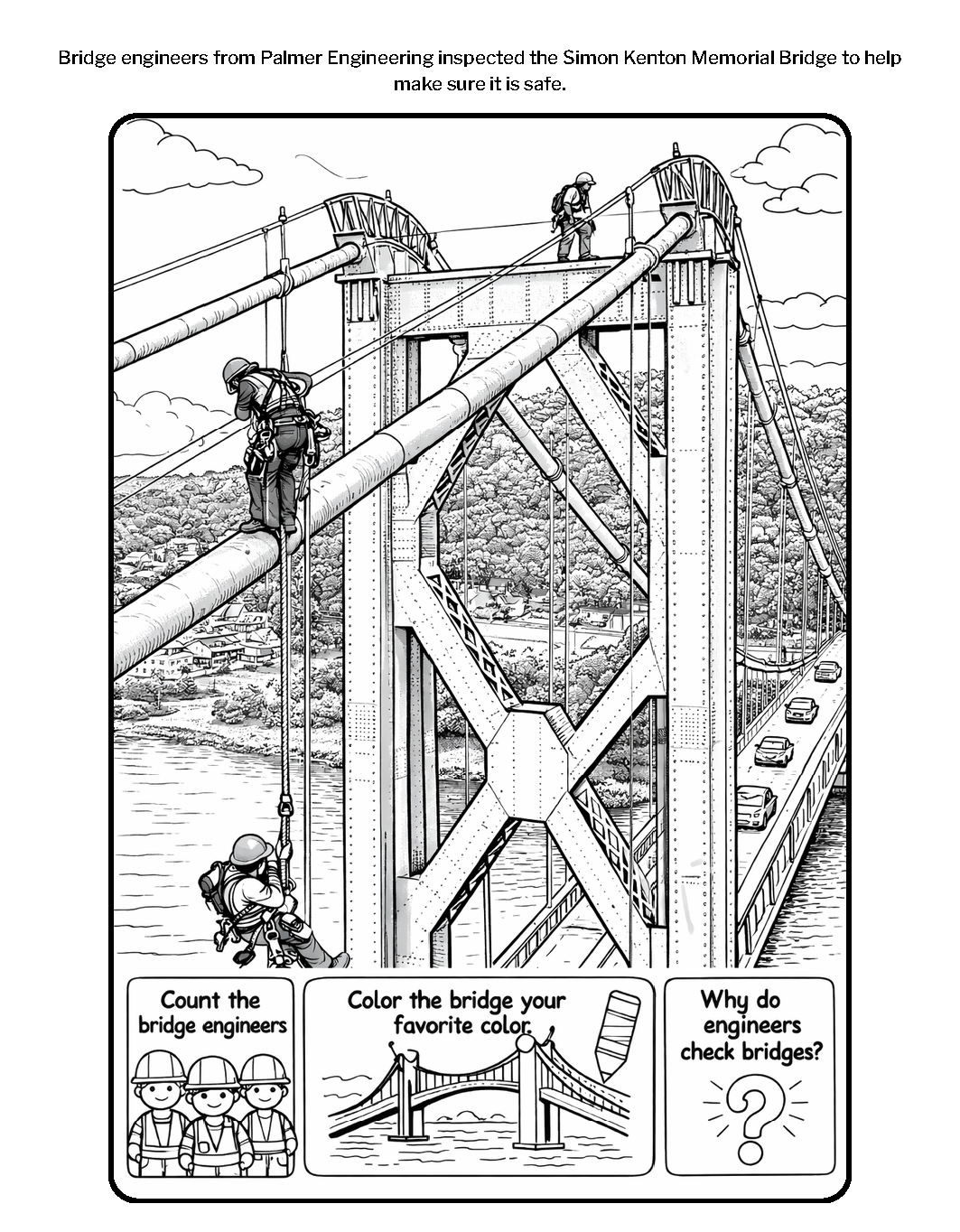
Coloring pages inspired by real Palmer projects
Mazes, counting, and drawing activities
Simple explanations of what engineers do
STEM challenges that encourage creativity and teamwork

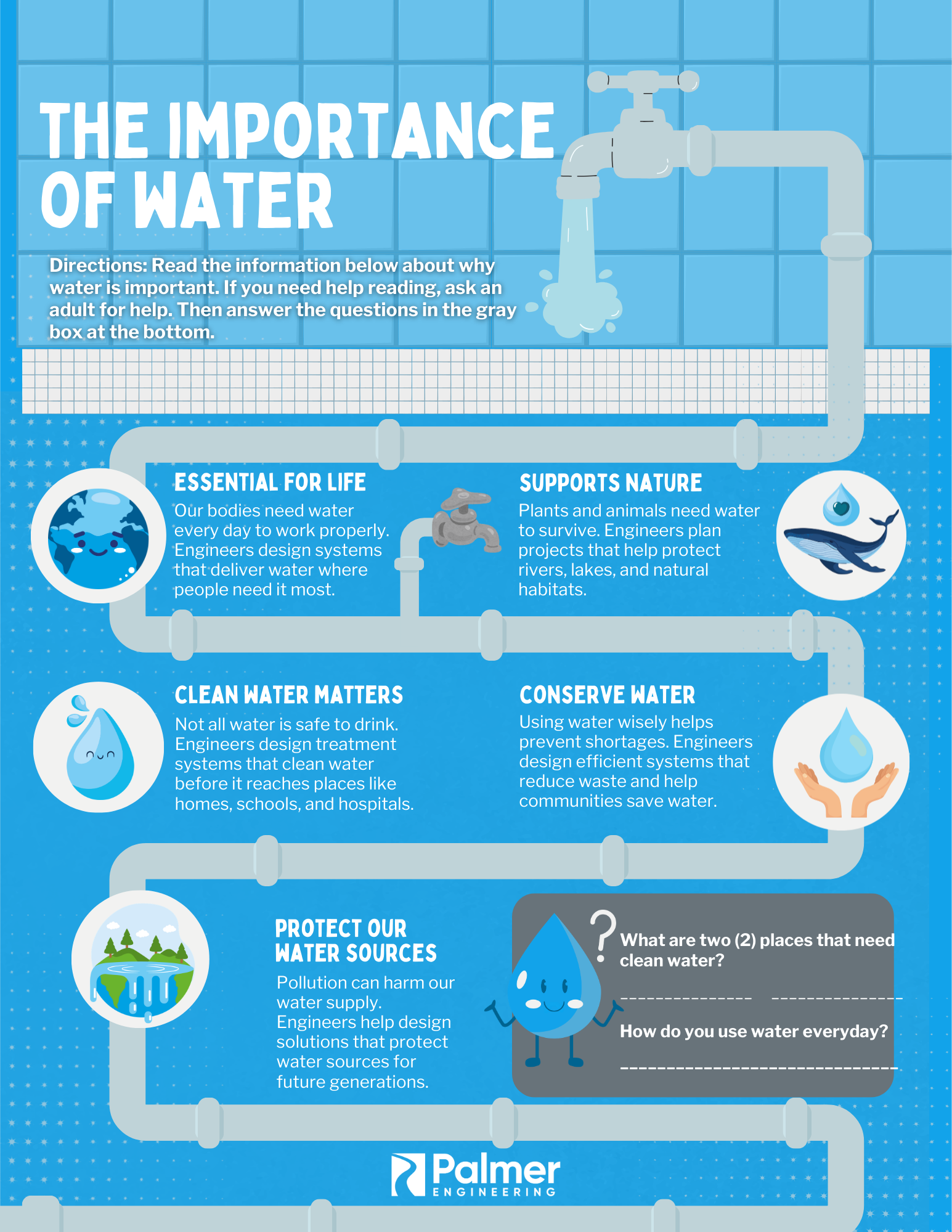
Water & Engineering
Why Water Matters
Learn how engineers help bring clean water to communities and protect this important resource.
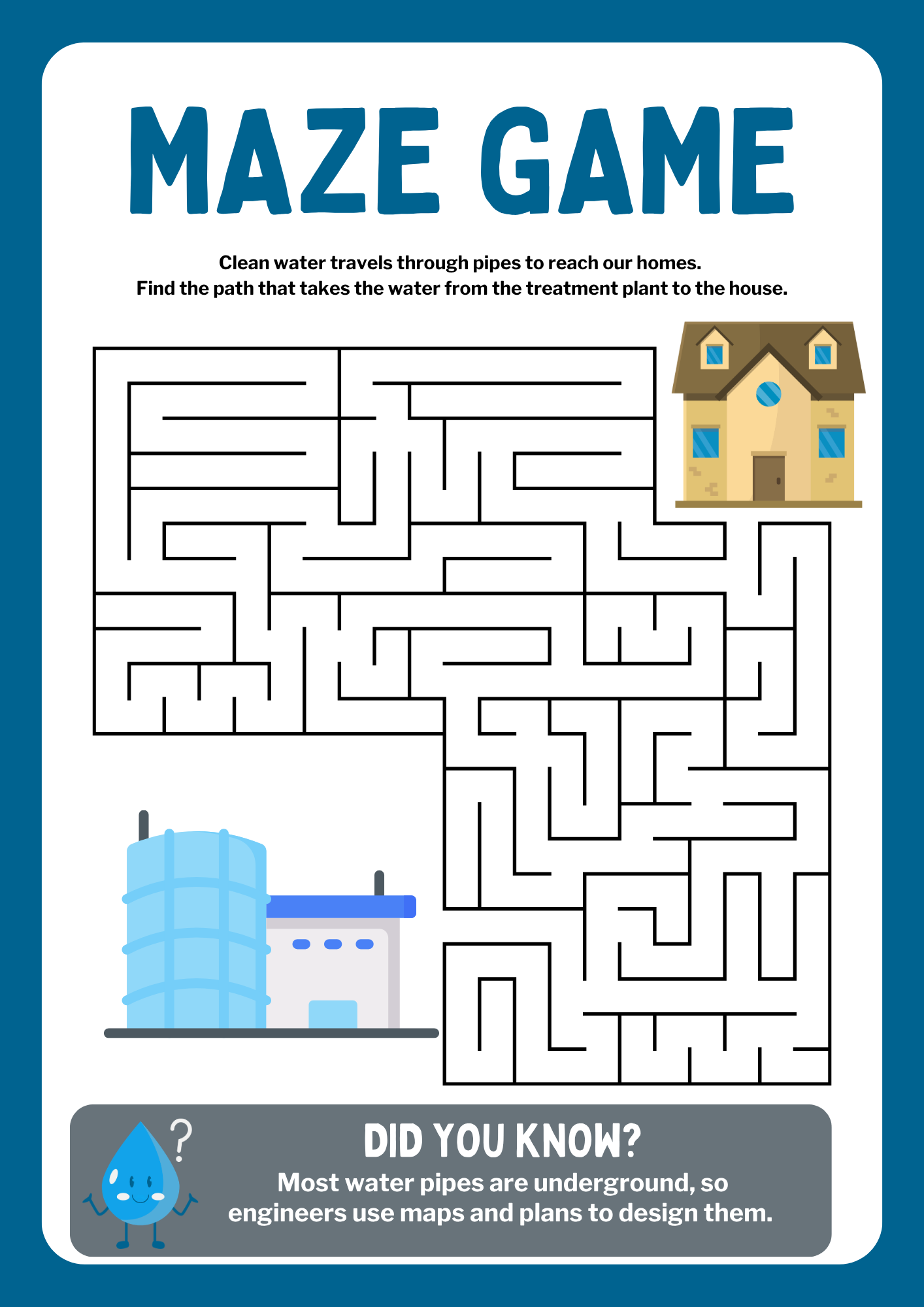
Engineering Coloring Activities
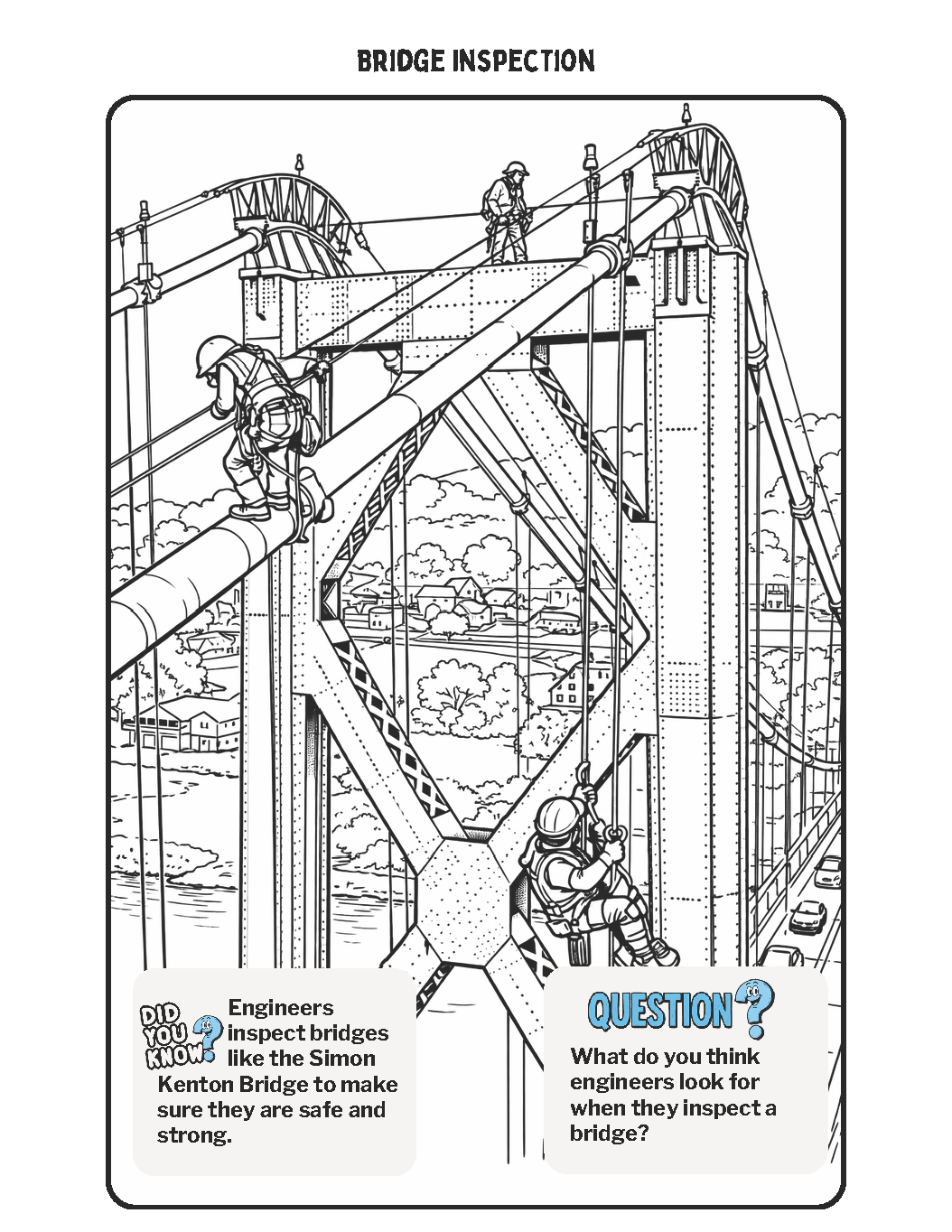
Explore our engineering-themed coloring activity pages inspired by real Palmer Engineering projects.

Hands-On STEM Challenge
Palmer Engineering Tower Challenge
Build the tallest free-standing tower using cups! This classroom-friendly STEM challenge helps students:
Practice teamwork and problem-solving
Think like engineers
Learn through hands-on design and testing
Perfect for classrooms, STEM nights, and National Engineers Week activities.

Stay Connected
Want to know when we add new engineering activities for kids? Sign up to receive a quick email when new resources are available.
We’ll only send occasional updates about new educational resources. No spam.