
What Really Happens During a Bridge Inspection?
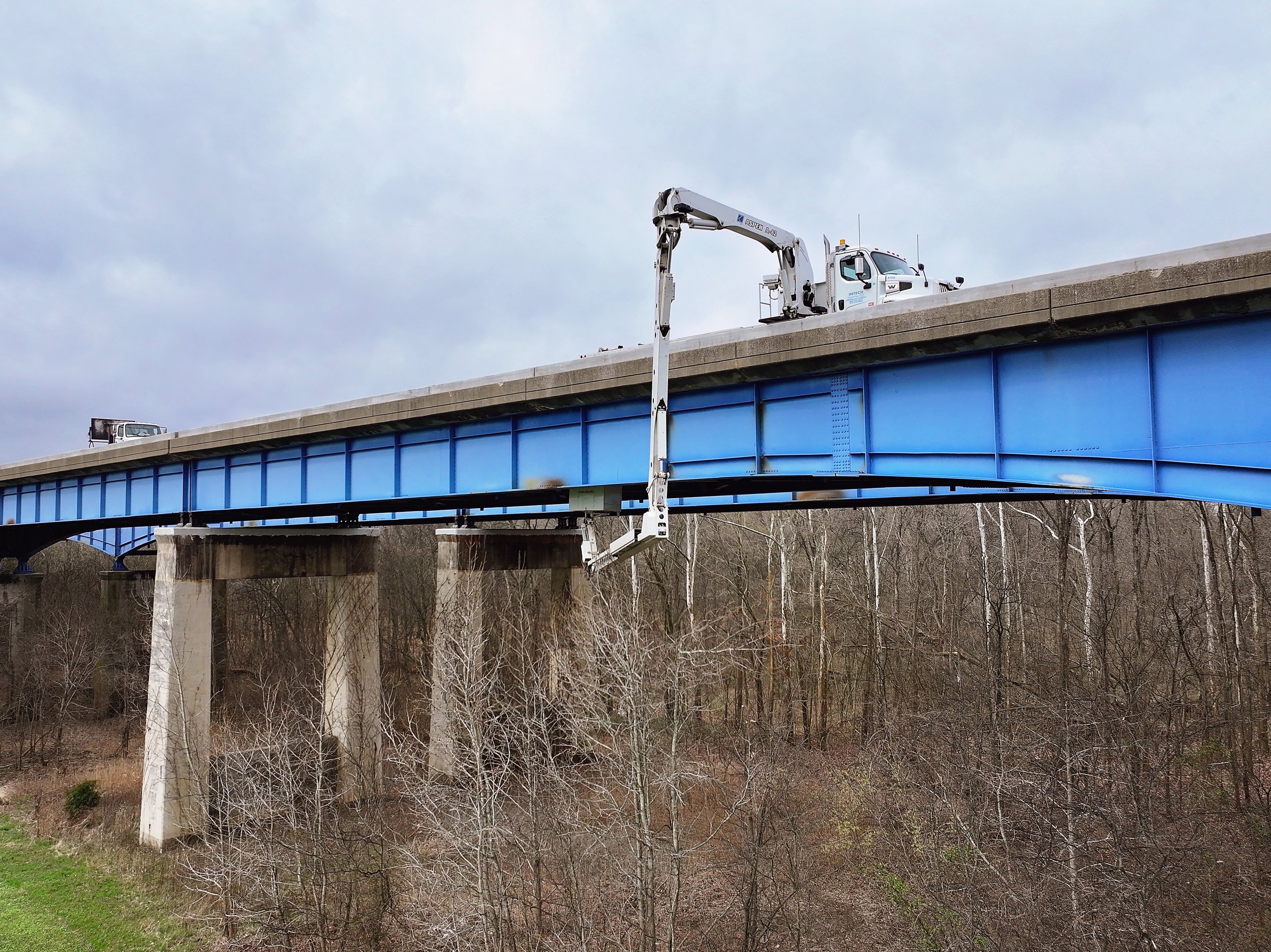
When most people drive across a bridge, they don’t think twice about what’s holding them up. But behind the scenes, bridge inspections play a critical role in keeping our infrastructure safe and reliable.
We asked members of our team to share what goes into a bridge inspection—and what they’re looking for along the way.
A Closer Look at Bridge Inspections
While there are many ways to inspect a bridge, a typical inspection follows the same path that traffic loads take through the structure.
It starts at the deck—the surface vehicles drive on—then moves to the superstructure, which includes beams and girders, and finally down to the substructure, such as piers and abutments. This mirrors how weight travels through a bridge, from the roadway into the structure and ultimately into the ground.
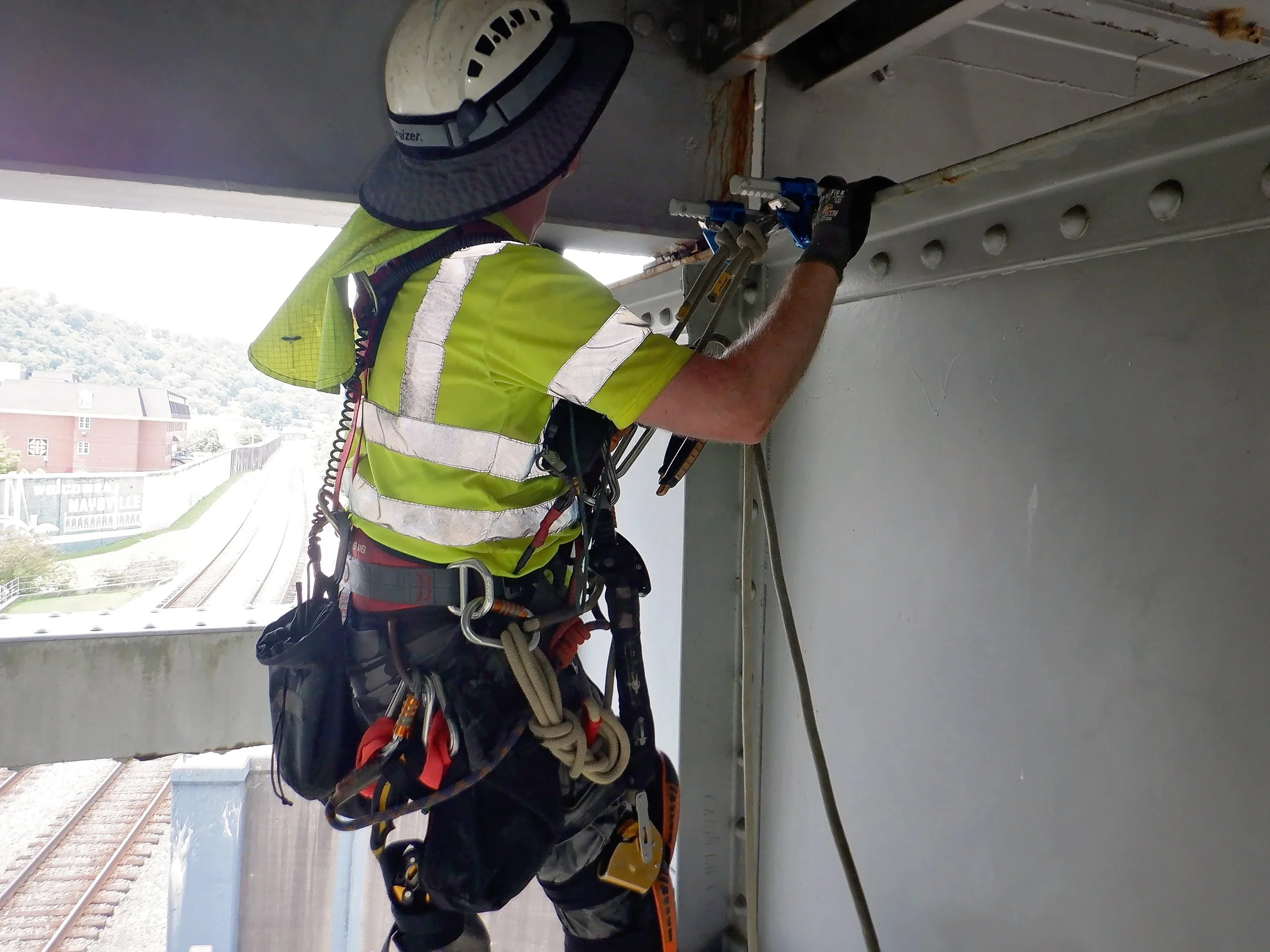
To access these different components—especially the underside of the bridge—inspectors often use specialized equipment like “snooper” trucks, which allow them to safely reach areas that would otherwise be difficult to inspect.
(Photo: A member of Palmer’s bridge inspection team at the Simon Kenton Bridge over the Ohio River between Aberdeen, OH and Maysville, KY in 2025.)
In addition to this equipment, technology is also changing how inspections are performed. Tools like drones allow teams to safely access hard-to-reach areas and capture detailed visuals.
As Caitlin Brown, EIT, recalls, “When I first started inspecting bridges 10 years ago, we didn’t have access to drone technology. Drones are helpful to get into spaces that humans can’t. Although drones will never replace the human eye, they are a helpful tool.”
At each level, inspectors are looking for defects, which vary depending on the material. Concrete bridges are evaluated for cracks and spalling, while steel bridges are inspected for corrosion.
The top priority is identifying anything that could impact public safety. If a serious issue is found, it’s classified as a critical finding and requires immediate attention.
As David Rust, PE, explains, “A critical finding requires immediate attention. For example, this could be a newly discovered crack in a steel bridge or a previously identified defect that has grown significantly since the last inspection. Findings like these require engineering analysis to determine whether the bridge can safely remain in service or if immediate repairs are needed to bring it back into service.
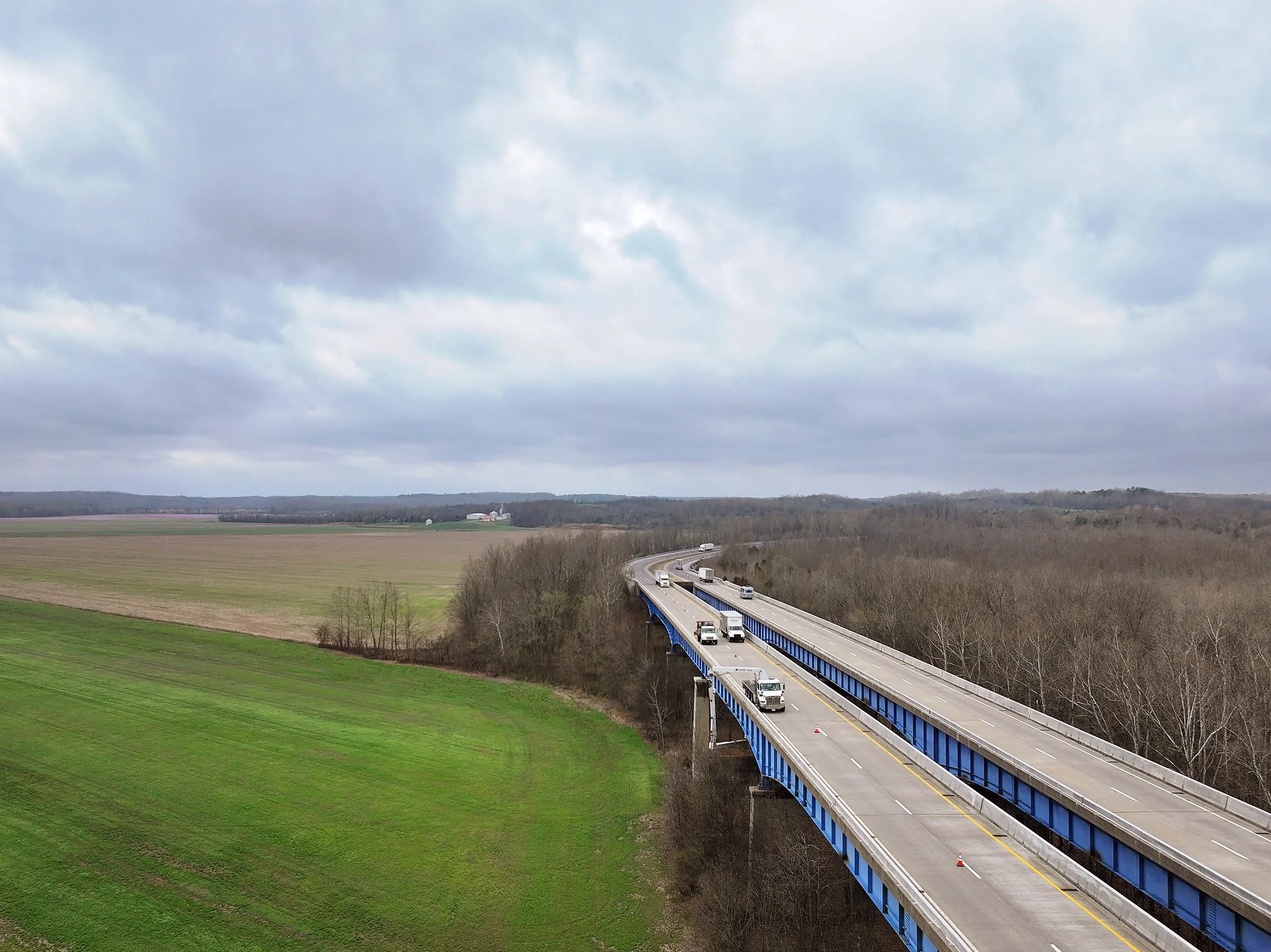
Check out this video of Palmer’s bridge inspection team at the Western Kentucky Parkway Bridge over the Green River at the Muhlenberg/Ohio County line. The inspection took place during the week of March 9-13, 2026.
Why Bridge Inspections Matter
Bridge inspections haven’t always been standardized. Before the Silver Bridge collapse in 1967, there was no national inspection standard in the United States. The Silver Bridge, spanning the Ohio River between Point Pleasant, West Virginia, and Kanauga, Ohio, collapsed without warning, tragically claiming 46 lives.
This incident had a profound impact on how civil engineers assess the integrity of bridge structures. In response, the Federal-Aid Highway Act of 1968 initiated the first national bridge safety inspection program and directed the development of the National Bridge Inspection Standards (NBIS), along with the creation of a nationwide bridge inventory.
(Photo: Western Kentucky Parkway Bridge over the Green River at the Muhlenberg/Ohio County line in March 2026.)
By 1970, federal law required routine inspections for bridges on the Federal-aid highway system, and in 1978, that requirement was expanded to include all public bridges longer than 20 feet—establishing the consistent, nationwide approach to bridge safety that remains in place today.
Today, nearly every bridge in the U.S. is inspected at least once every two years. This is especially important as infrastructure continues to age—nearly half of all bridges in the country are at least 50 years old. Regular inspections help guide maintenance decisions, extend the life of structures, and make the most of available resources by addressing issues before they become major problems.
The Realities of Bridge Inspections
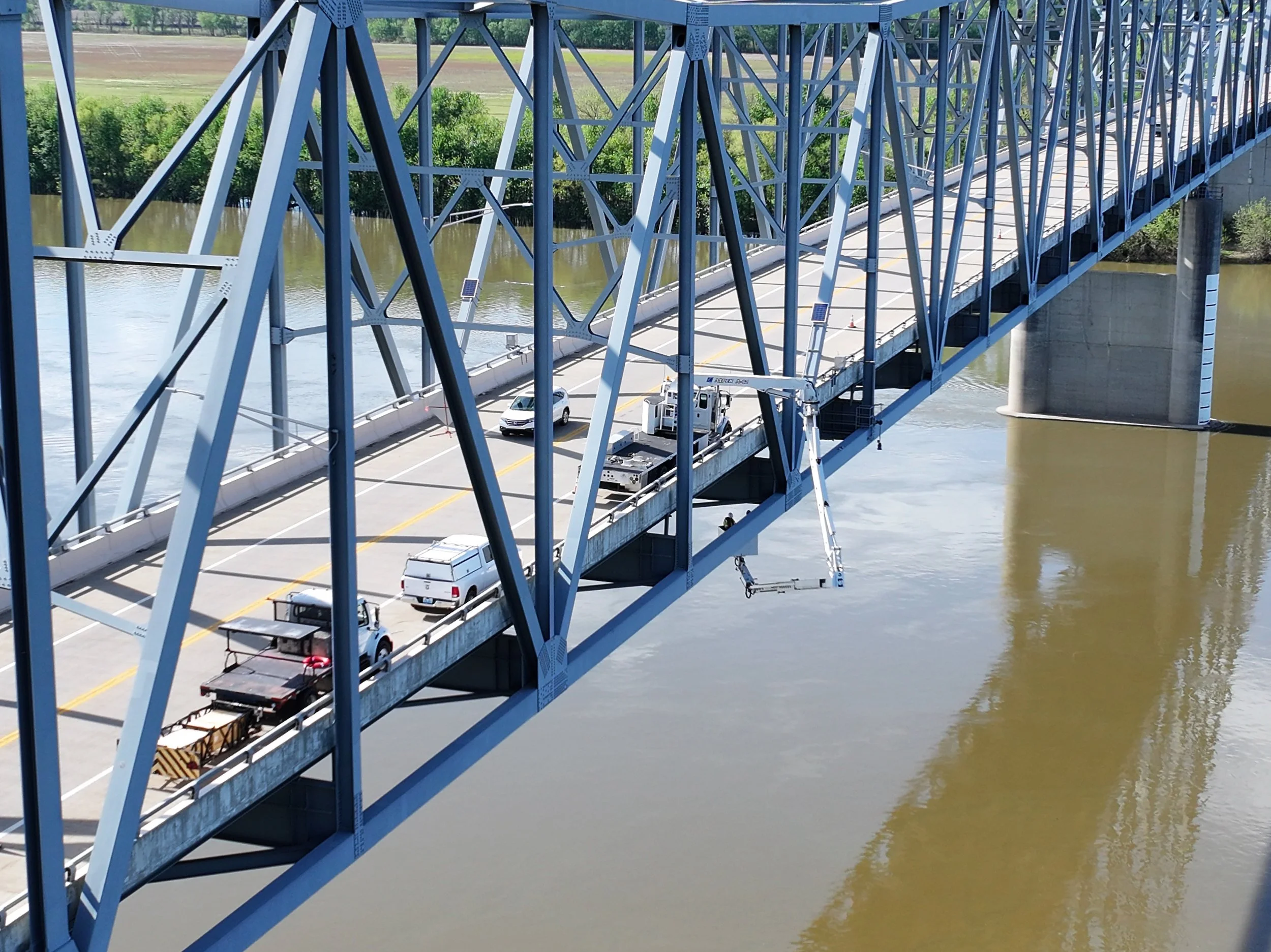
Bridge inspections often involve working in dynamic environments—ranging from wildlife encounters to operating just feet from live traffic.
Brown recalls a close call with a copperhead during an inspection. She notes that “snakes and bats love bridges, so encounters aren’t uncommon,” but she much prefers spotting turtles in the creeks.
While wildlife can be an unexpected part of the job, one of the biggest risks inspectors face isn’t the structure—it’s traffic.
As we get ready for National Work Zone Awareness Week later this month, it’s a good reminder for drivers to slow down in and around bridge inspection areas. Even when crews aren’t working directly in the roadway, they are often just feet away from live traffic.
When you see crews working on or around a bridge:
Slow down
Move over if it’s safe to do so
A little extra awareness can go a long way in keeping inspection teams safe while they work to keep our infrastructure secure.
(Photo: Palmer’s bridge inspection crew at the Carl Perkins Bridge over the Ohio River between Scioto County, OH and Greenup County, KY in 2025).
Keeping Communities Connected
Bridge inspections may happen out of sight, but their impact is felt every day. By identifying issues early and ensuring structures remain safe, inspection teams help keep communities connected—one bridge at a time.
Want to explore more? Our Exploring Engineering webpage includes additional bridge facts and activities for preschool and elementary students in our downloadable booklets.