
SR-96 Widening Improvements
WILLIAMSON COUNTY, TN
TRANSPORTATION
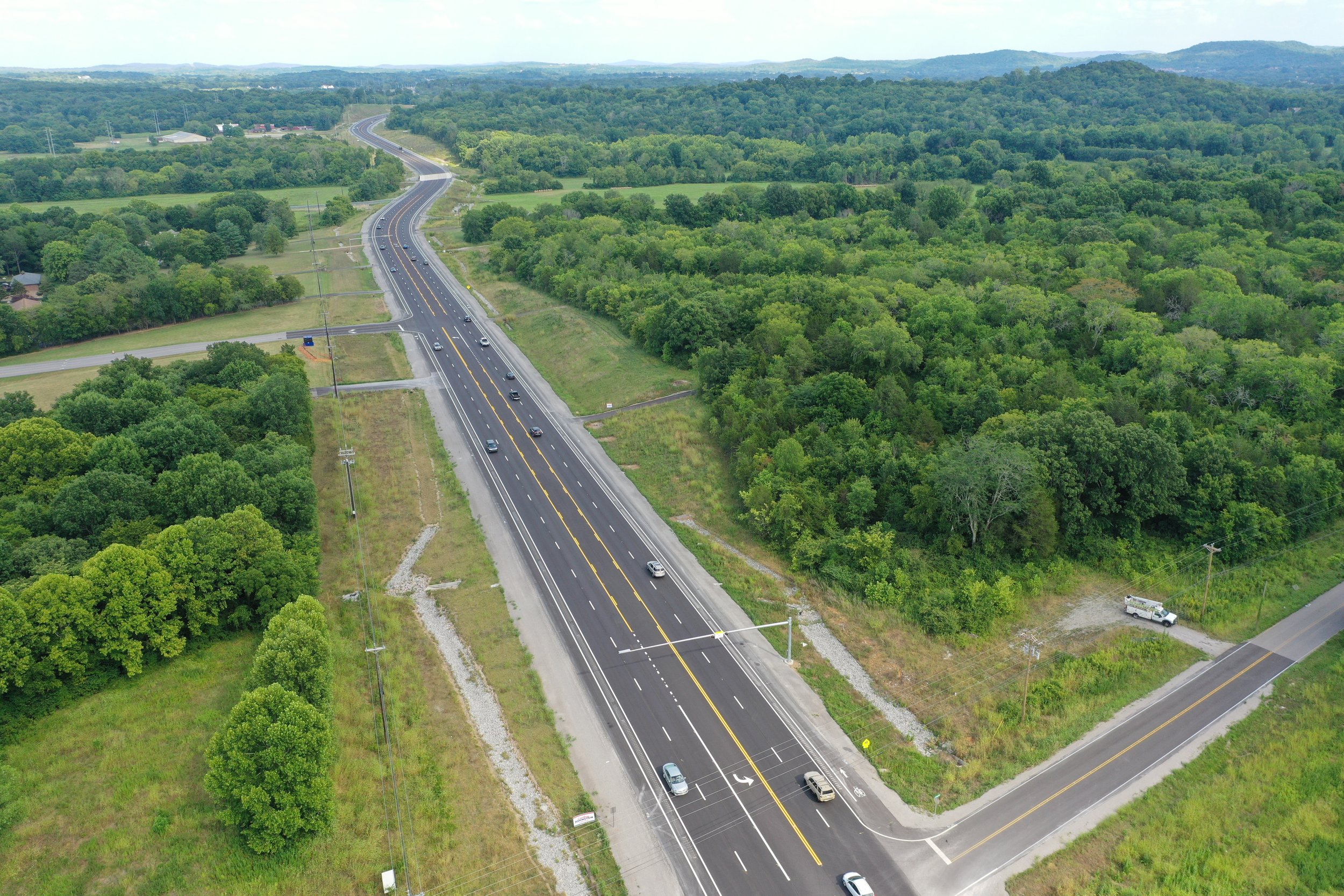
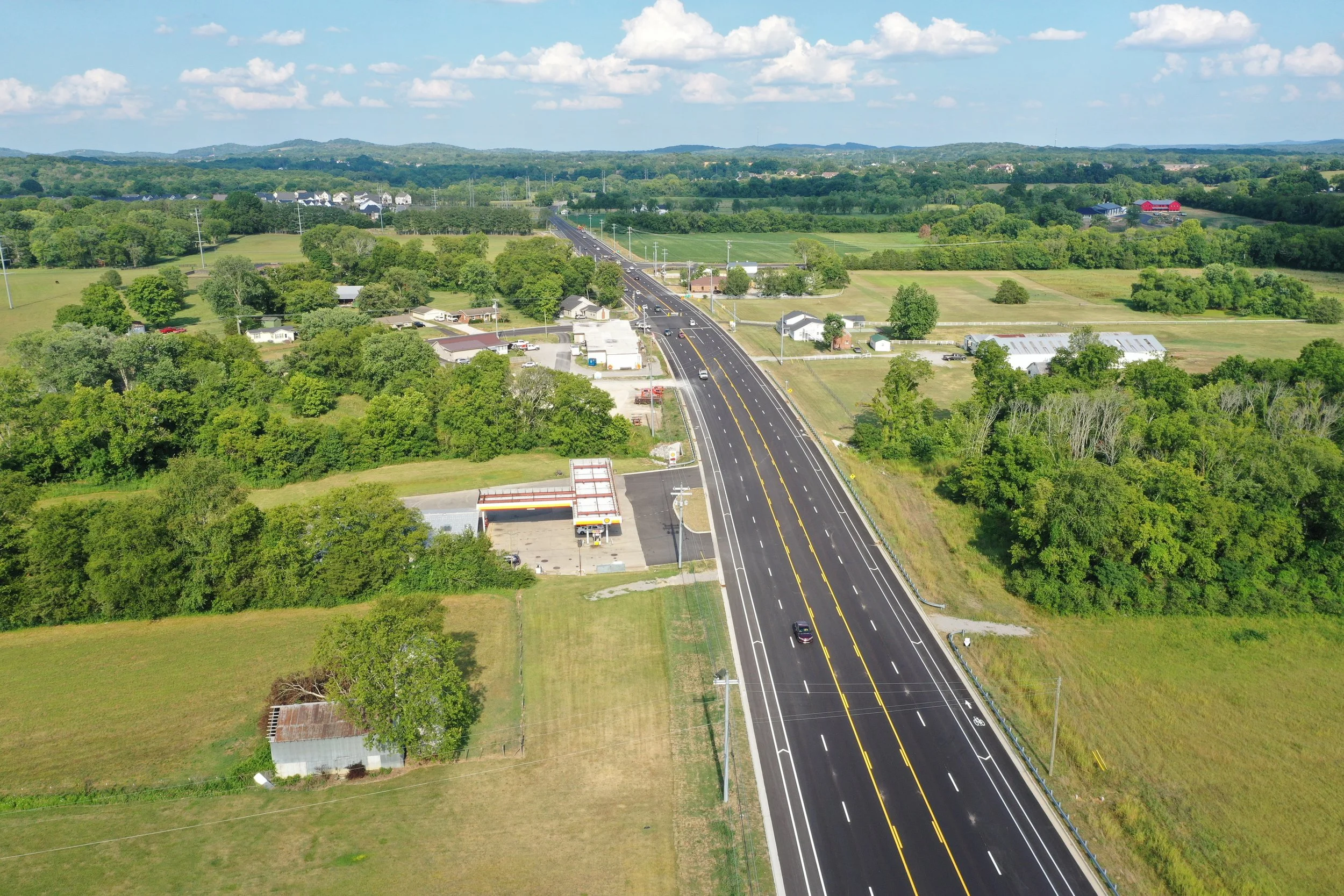
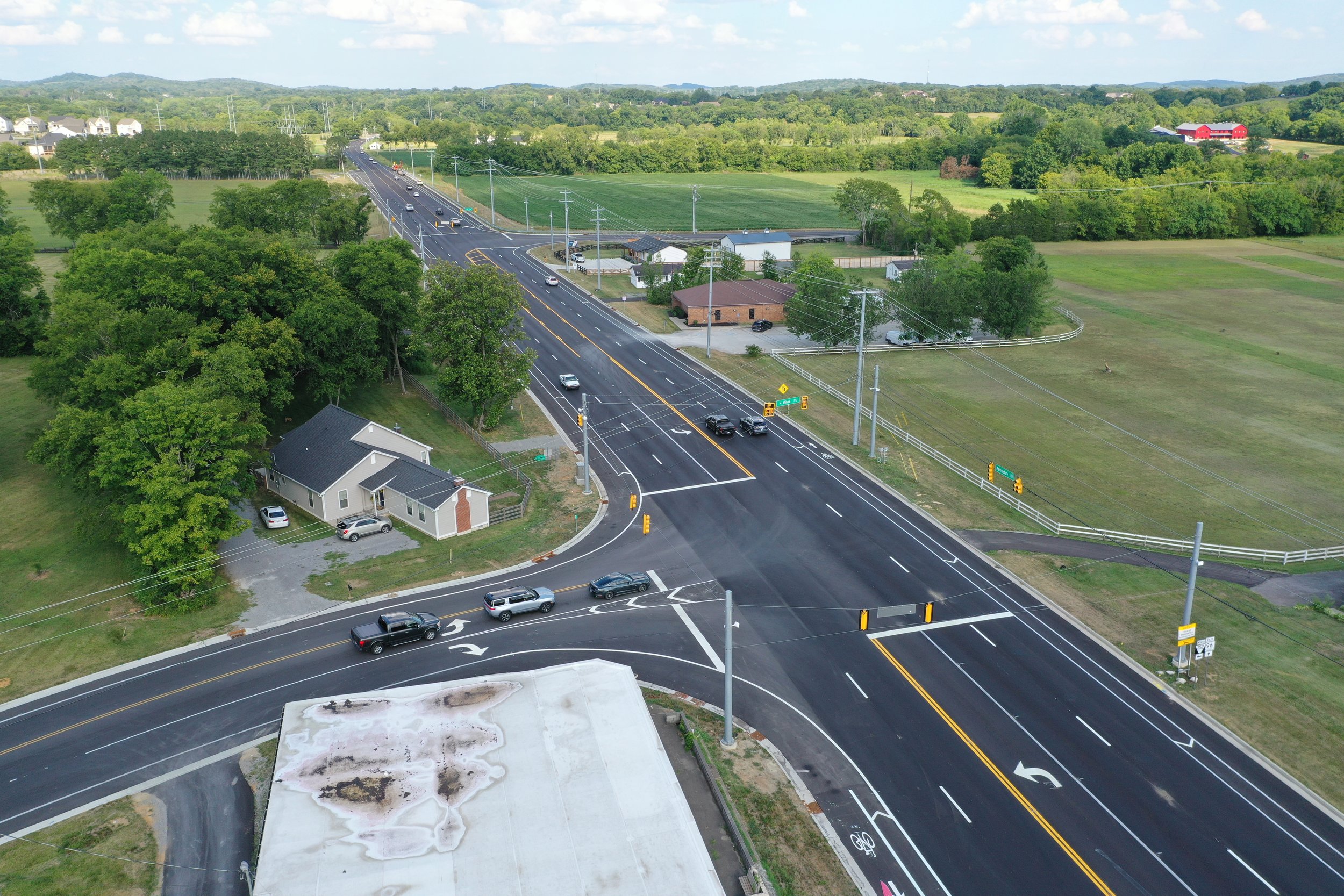
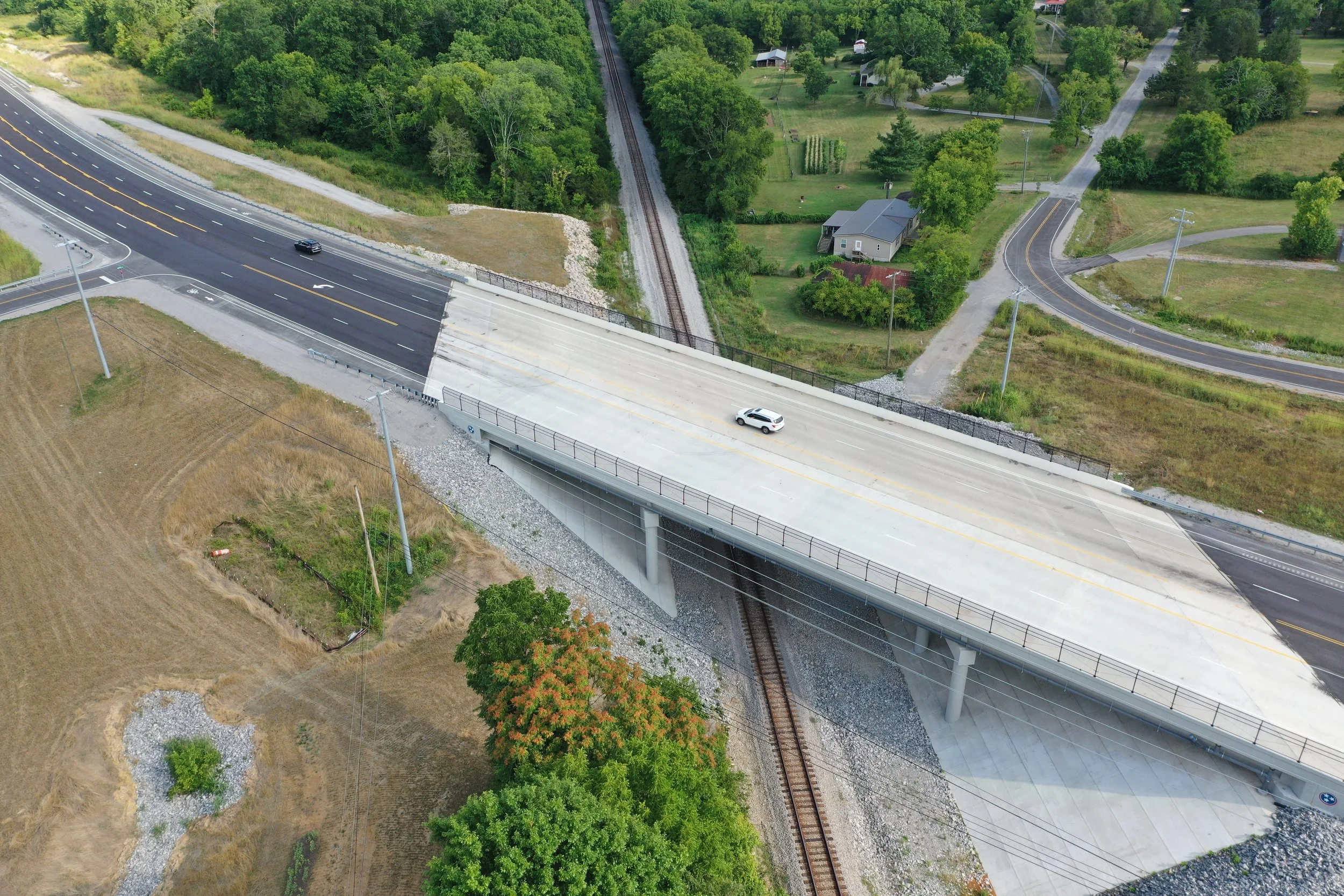
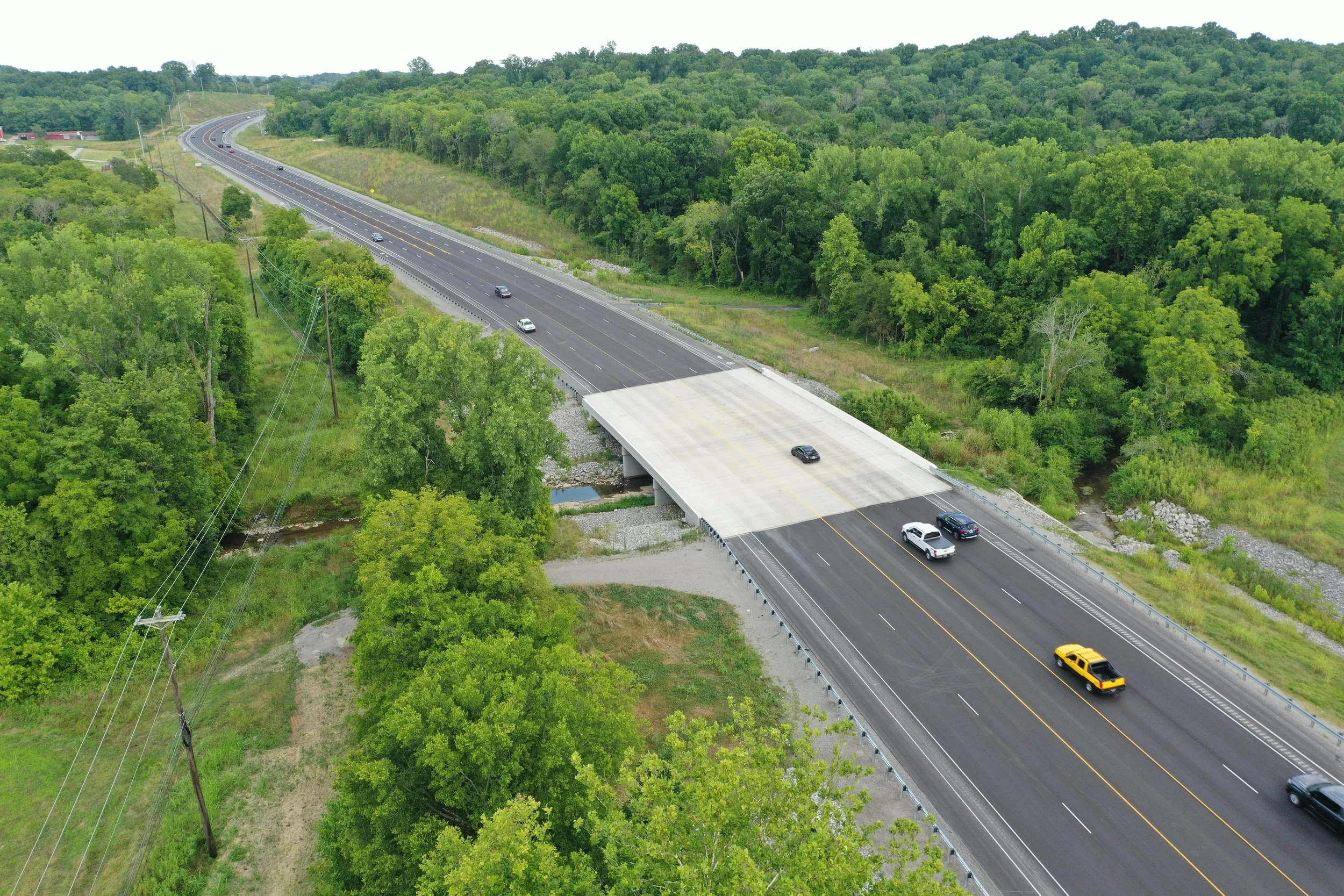
Palmer Engineering provided design services for the widening of 5.8 miles of SR-96 in Williamson County, Tennessee, from east of Arno Road to SR-252 (Wilson Pike). The project expanded the existing two-lane roadway into a combination of five-lane urban curb-and-gutter and rural highway typical sections to improve safety, increase capacity, and reduce congestion in one of Middle Tennessee’s fastest-growing areas.
The project served as the first phase of a larger corridor improvement initiative along SR-96 between Franklin and Murfreesboro. Improvements included horizontal and vertical roadway alignments, urban and rural drainage design, erosion prevention and sediment control plans, traffic signal design, signing and striping plans, traffic control plans, and permit sketch development. The project also incorporated natural channel stream design principles to create a more sustainable stream relocation solution.
A key aspect of the project involved updating legacy design and right-of-way information to current standards while maintaining previously established right-of-way and easements. Additional coordination was required to convert historical metric project files and outdated design software into current English-based construction plan formats.
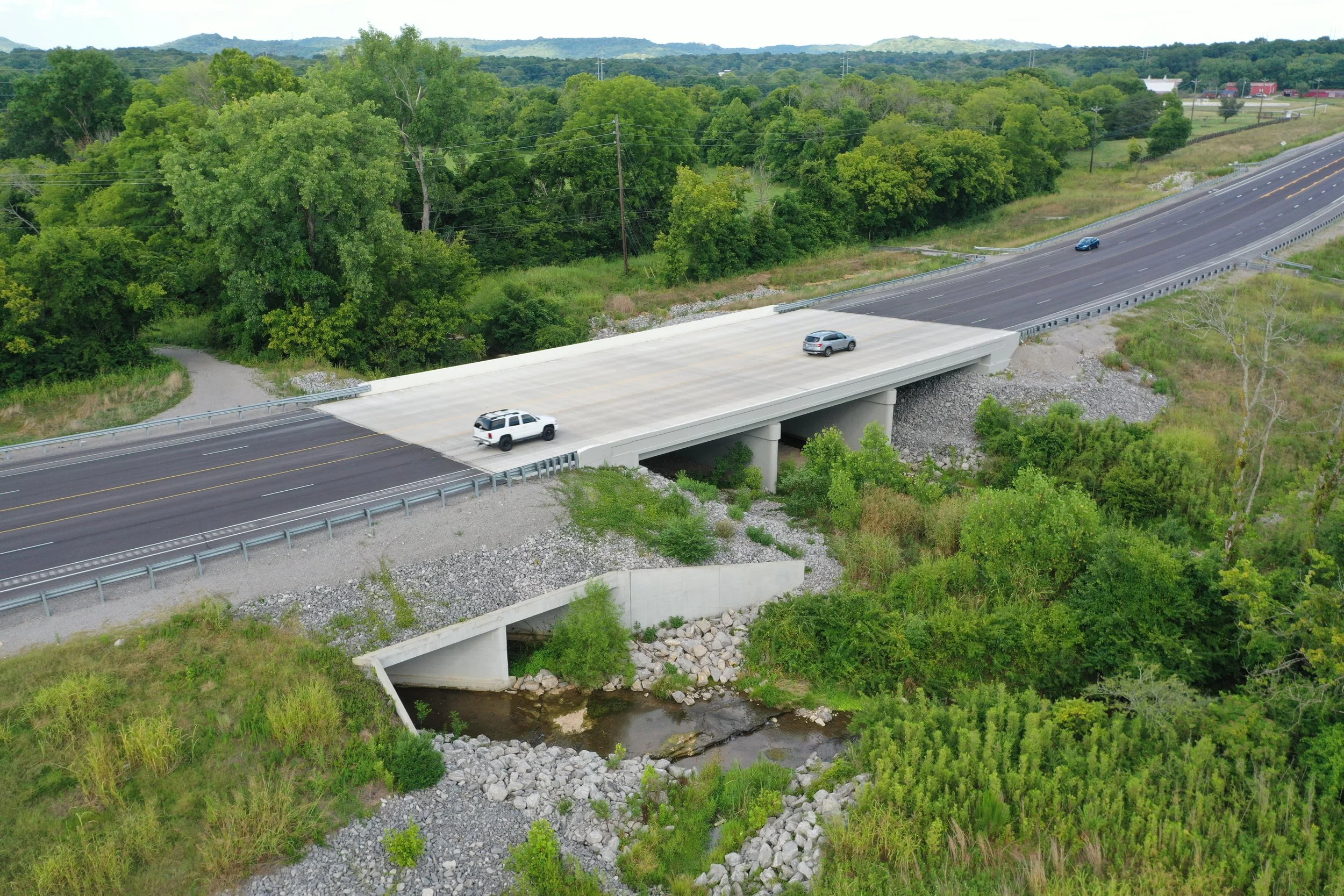
The widened corridor includes two travel lanes in each direction, a center turn lane, 10-foot shoulders, and new bridges over Mayes Creek and the CSX Railroad, improving both regional mobility and long-term corridor safety.
Unique Aspects
-
Opportunities
Corridor Expansion: Supports long-term growth and mobility improvements along a key east-west corridor connecting Franklin and Murfreesboro
Safety Enhancements: Improves roadway operations and reduces congestion through widening, turn lane additions, updated traffic signals, and modern roadway design standards
Urban and Rural Integration: Combined urban curb-and-gutter sections with rural highway design to meet the varying needs of the corridor
Environmental Stewardship: Incorporated natural channel stream design principles to create a more sustainable stream relocation solution
-
Challenges
Legacy Design Conversion: Updated older metric-based right-of-way files and converted historical Microstation and InRoads files into current design platforms and English construction plan standards
Right-of-Way Constraints: Modernized the roadway design while maintaining previously established right-of-way and easements, particularly in tighter urban sections
Complex Corridor Coordination: Balanced urban and rural roadway transitions, drainage systems, traffic operations, and environmental considerations throughout the corridor
Traffic Maintenance: Developed traffic control plans to maintain mobility and minimize disruptions during construction along an active commuter route
-
Successes
Modernized Corridor Design: Successfully developed construction plans that upgraded the corridor to current roadway design standards while preserving prior project investments
Integrated Transportation Improvements: Combined roadway widening, drainage improvements, traffic signal design, signing, striping, and stream relocation into one coordinated project
Environmental Innovation: Delivered a natural channel stream relocation that aligned transportation improvements with environmental best practices
Regional Impact: Helped advance the first phase of a larger SR-96 corridor improvement effort supporting future growth and transportation demands in Williamson County
Project Gallery
Key Team Members
-

Brian Lee, PE, CPESC, CPSWQ
PROJECT MANAGER
-

Scott Wilson, PE
TEAM MEMBER
-

Dustin Hunt
TEAM MEMBER
-

Josh Ferguson, PE
TEAM MEMBER
-
Mike Simpson
TEAM MEMBER