

Statewide Fracture Critical Bridge Inspections
VARIOUS COUNTIES, KY
STRUCTURES
Palmer Engineering was selected by the Kentucky Transportation Cabinet (KYTC) for one of the Statewide Fracture Critical Bridge Inspection contracts in 2021-2022, covering key bridges across multiple counties:
I-65 Girder-and-Floorbeam Bridges over the Rolling Fork River in Hardin County (047B00133L&R) - March 2021
US 42 Through Truss Bridge over the Kentucky River in Carroll County (021B00043N) - June 2021
US 31W Deck Truss Bridge over the Green River in Hart County (050B00004N) - August 2021
US 27 Girder-and-Floorbeam Bridges over the Kentucky River in Garrard County (040B00028L&R) - July 2022
Unique aspects
-
Opportunities
Integrating Advanced Technology: Ability to expand inspection capabilities through FAA-certified drone use, capturing high-resolution imagery of bridge decks, substructures, and hard-to-reach areas
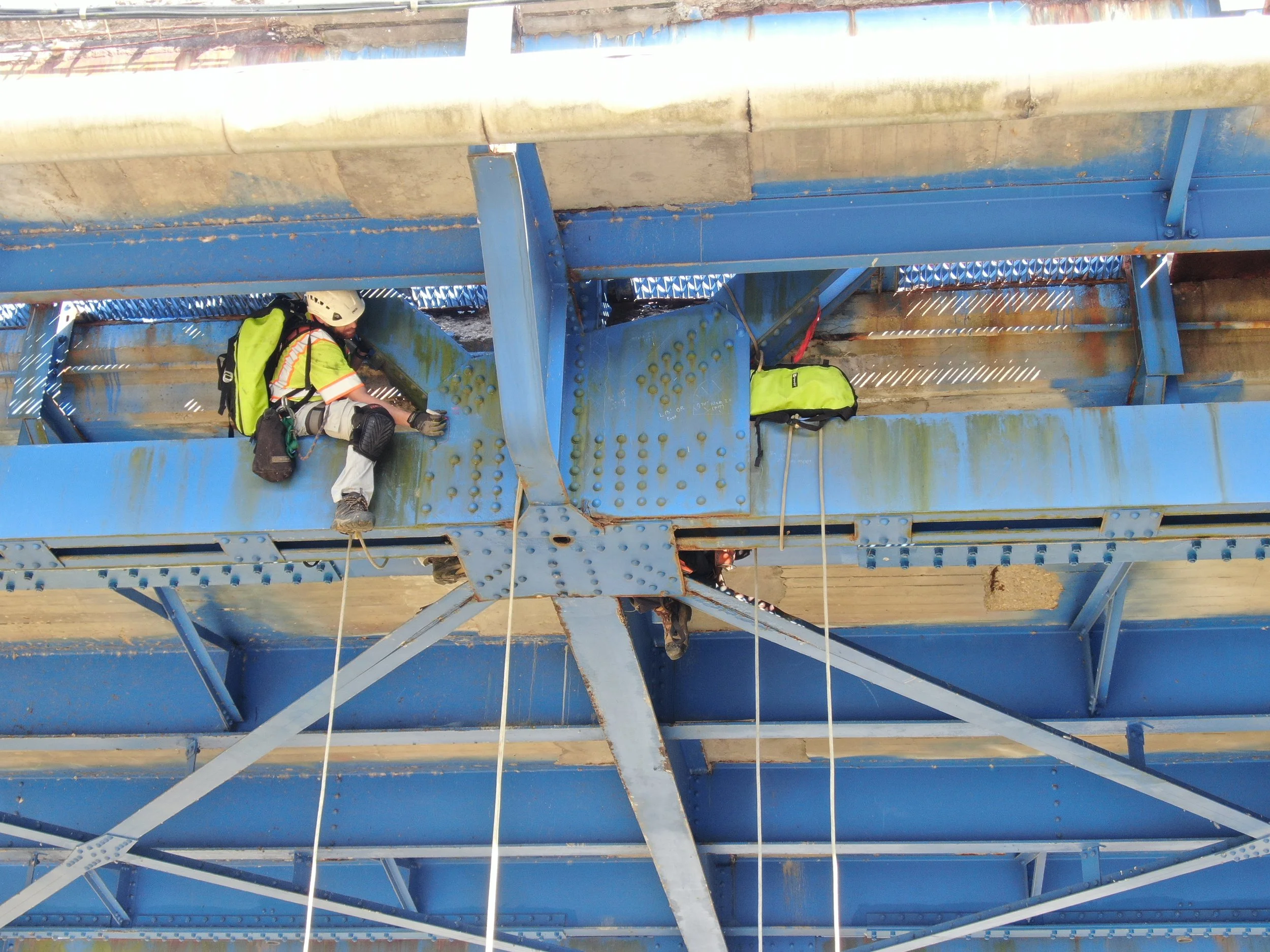
Enhanced Safety Practices: Opportunity to apply rope-access and fall-arrest techniques to reduce lane closures and improve inspector safety during truss inspections
Improved Documentation Accuracy: Chance to modernize reporting through updated framing plans, detailed deficiency records, and standardized submission into AASHTOWARE Bridge Management Software (BrM)
Efficient Traffic Management: Leveraging off-peak lane closures and alternative access methods to minimize disruption to the traveling public
-
Challenges
Accessing Difficult Bridge Components: Truss structures, pin-and-hanger assemblies, and deteriorated elements required specialized access techniques and tools
Maintaining Safety in Complex Conditions: Industrial rope access on large trusses in Hart and Carroll Counties demanded rigorous safety protocols and highly trained teams
Managing Deterioration Issues: Heavy distortion and corrosion on select gusset plates required additional load rating analysis under compressed timelines
Traffic Constraints: Working above active roadways and waterways required carefully planned lane closures, traffic control, and coordination to maintain safety and mobility
-
Successes
Comprehensive, Standards-Driven Inspections: All work was completed in full compliance with the Kentucky Bridge Inspection Procedures Manual and the AASHTO Manual for Bridge Element Inspection.
High-Quality Data Collection: Drone-assisted inspections, rope access, and specialty tools (such as mirrors for pin-and-hanger assemblies) produced detailed, accurate condition assessments.
Improved Asset Management Inputs: All Element-level data was successfully recorded in BrM and submitted according to KYTC requirements, enhancing long-term bridge management planning
Clear Documentation for Future Work: Updated framing plans and deficiency documentation created stronger reference materials for future inspections, maintenance, and rehabilitation decisions
Responsive Engineering Analysis: Timely load rating of distressed gusset plates enabled informed decision-making for safety and structural performance
Key Team Members
-

David Deitz, PhD, PE, SE
PROJECT MANAGER
-

David Rust, PE
TEAM MEMBER
-

Aaron Thomas, PE
TEAM MEMBER
-

Logan Sallee, PE
TEAM MEMBER
-

Ryan Damon, PE
TEAM MEMBER
-

Brad Robson, PhD, PE, SE
TEAM MEMBER
-

Sam Sergent, PE
TEAM MEMBER
-

Jon Murrin, PE
TEAM MEMBER