
The People Behind the Measurements: Celebrating Our Surveyors During National Surveyors Week
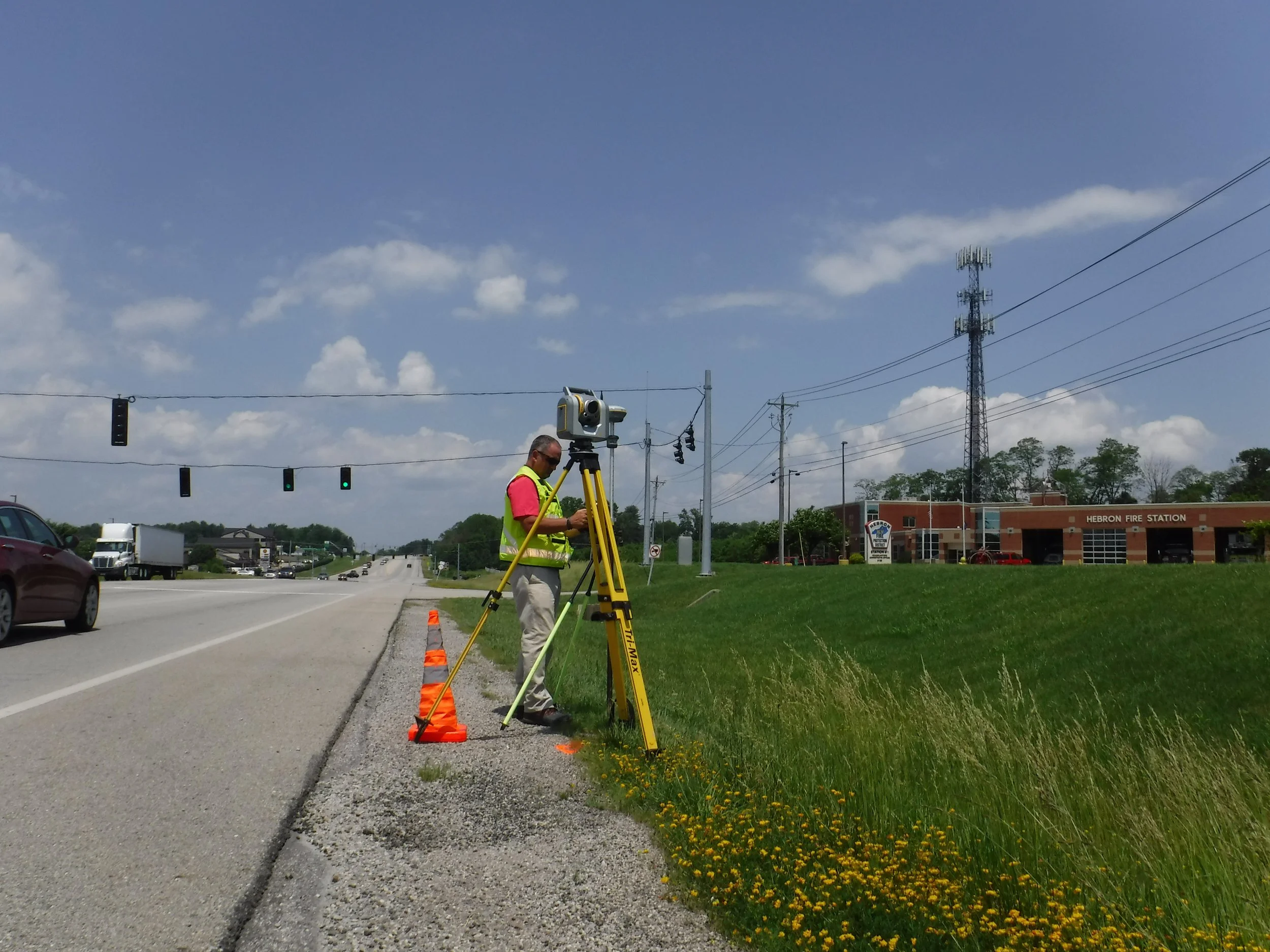
Hear from members of Palmer Engineering’s survey team and learn how experience, mentorship, and evolving technology continue to shape the surveying profession.
Surveying may begin with numbers, but it’s driven by people.
Behind every measurement, boundary, and terrain model are professionals who spend their days collecting data in the field and transforming it into information engineers rely on to design roads, bridges, and other infrastructure.
For many surveyors, the profession offers a rewarding mix of outdoor work, technical challenges, and the opportunity to help build something lasting.
At Palmer Engineering, surveying has been a core part of the firm’s work since its founding in 1969. Today, our survey team continues that tradition with decades of experience, technical expertise, and a shared passion for the profession.
We asked several members of our surveying team what they enjoy most about the profession and what keeps them passionate about the work.
A Profession That Blends Fieldwork, Technology, and Problem-Solving
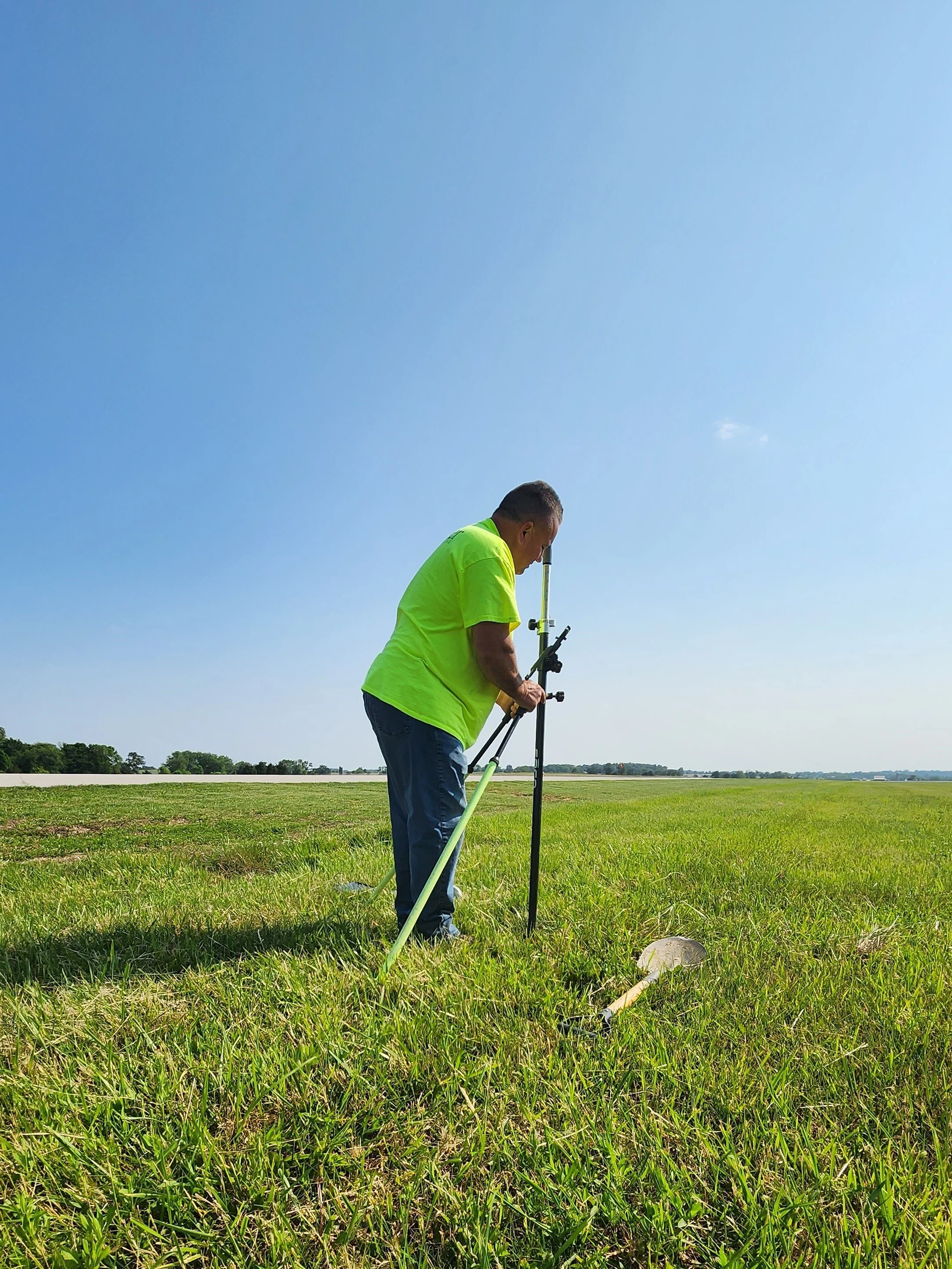
For many surveyors, the profession offers a unique balance between hands-on field work and technical analysis. Survey crews collect measurements in the field—often along transportation corridors, construction sites, and rural landscapes. That data is then processed using specialized software to create digital terrain models and mapping that engineers rely on for design.
Will Graves, a surveying technician focused on the newest generation of surveying technology, including static, mobile, and UAV LiDAR data collection and processing, was drawn to surveying because it combines both sides of the work.
“Surveying sits at the intersection of working outdoors and solving technical challenges,” said Graves. “There’s something powerful about taking what exists in the real world and translating it into data that engineers and communities rely on to design infrastructure.”
For many professionals in the field, that combination of outdoor work, problem-solving, and technical skill is what makes surveying so rewarding.
Brian Ward appreciates “the balance between working outdoors and indoors.”
For Steve Workman, the work also offers a connection to the past. He remarked, “I enjoy being outdoors, and the history you come across—like old markers—can be pretty interesting.”
That connection to history is something Gary Sharpe has experienced firsthand.
“I enjoy history, and surveying involves a lot of it when you trace the evolution of property ownership. I once traced property ownership back to the late 1700s—just after Kentucky became a state—to help reconcile a boundary concern. Making precise measurements is another part of the work I really enjoy,” said Sharpe.
And for David Shain, the reward comes when “turning out a good product that results in a good construction project.”
Together, these perspectives highlight the diverse skills that surveying requires—from outdoor field work and historical research to technical analysis and precise measurement—all working together to support the infrastructure communities depend on.
A Career Built on Mentorship and Opportunity
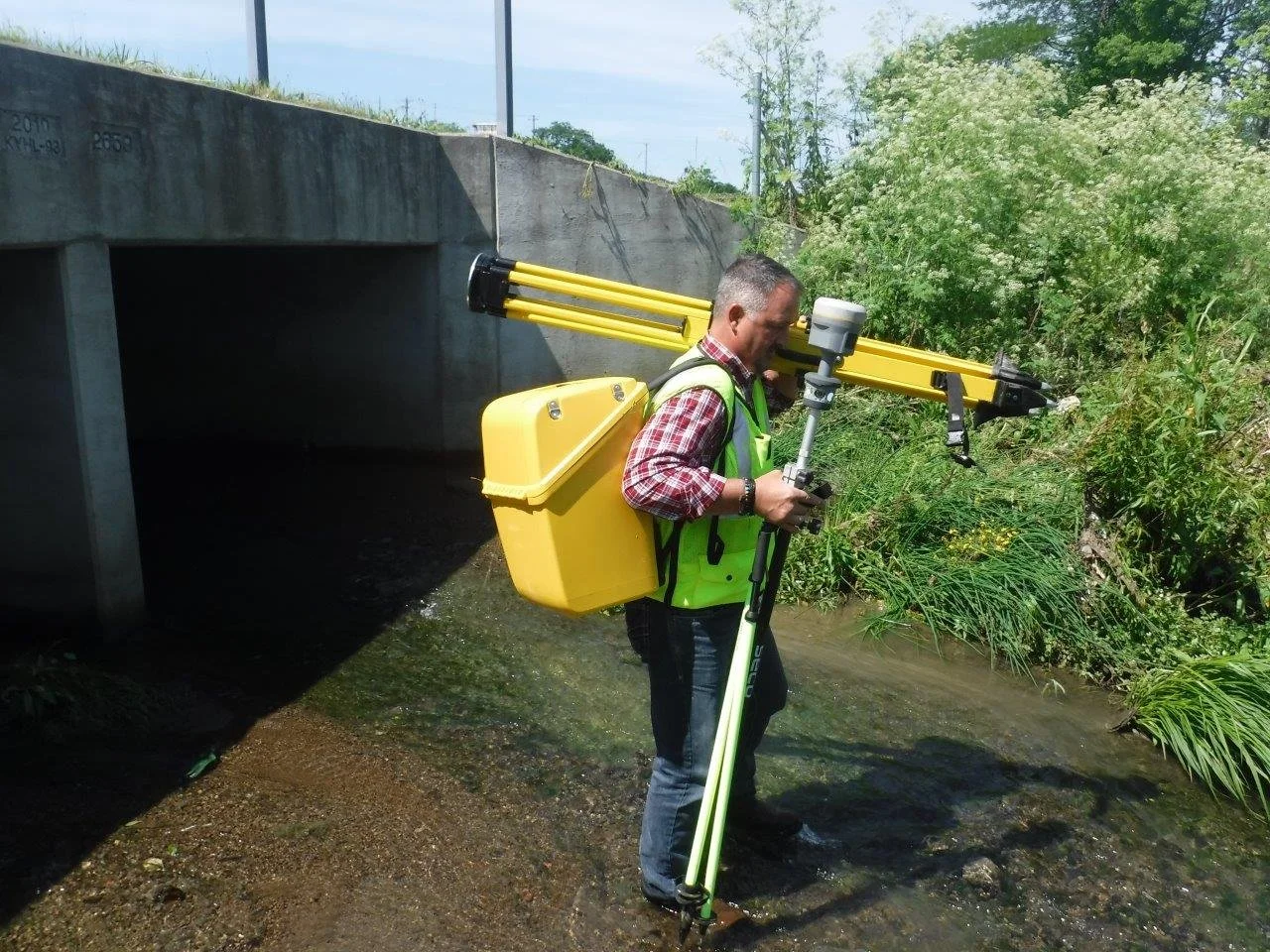
Many members of the Palmer Engineering survey team were introduced to the profession through mentors and early opportunities that helped shape their careers.
James Mayo credits Ralph Palmer—one of the firm’s founders—with guiding him toward surveying. Mayo will celebrate 50 years with Palmer Engineering next year, a career that began with the encouragement and trust Palmer placed in him early on.
“Ralph Palmer had faith in my abilities and pushed me in that direction,” Mayo says. “The problem-solving aspect of surveying and the adventure involved in the work kept me interested.”
For Ralph Palmer’s son, Craig, the influence began even earlier.
“I was born into it,” he says. “My father would take me out surveying on Saturdays when I was about ten years old.”
Those early experiences helped shape his career and reflect the legacy of surveying that has been part of Palmer Engineering since the firm’s founding.
Experience Built Over Decades
Many members of Palmer Engineering’s survey team have witnessed firsthand how dramatically the profession has evolved over time.
Gary Sharpe, who has been practicing since the early 1980s, noted, “I’ve seen surveying equipment evolve from the transit and chain to GPS surveying based on satellites.”
While the tools have advanced significantly, the core principles of surveying have remained the same—accurate measurements, careful documentation, and sound professional judgment.
Brian Ward explains that even with today’s technology, the fundamentals of the profession are unchanged.
“Surveying fundamentally is still about using known locations to identify unknown locations,” said Ward.
Integrity and Professional Responsibility
Surveying requires more than technical skill—it demands sound judgment, accountability, and a strong sense of professional responsibility.
David Shain emphasizes the importance of approaching the work with the right mindset.
“Think of yourself as a professional. That mindset helps you make good decisions in the field,” Shain says.
Jody Barker agrees and added, “Your integrity is up to you.”
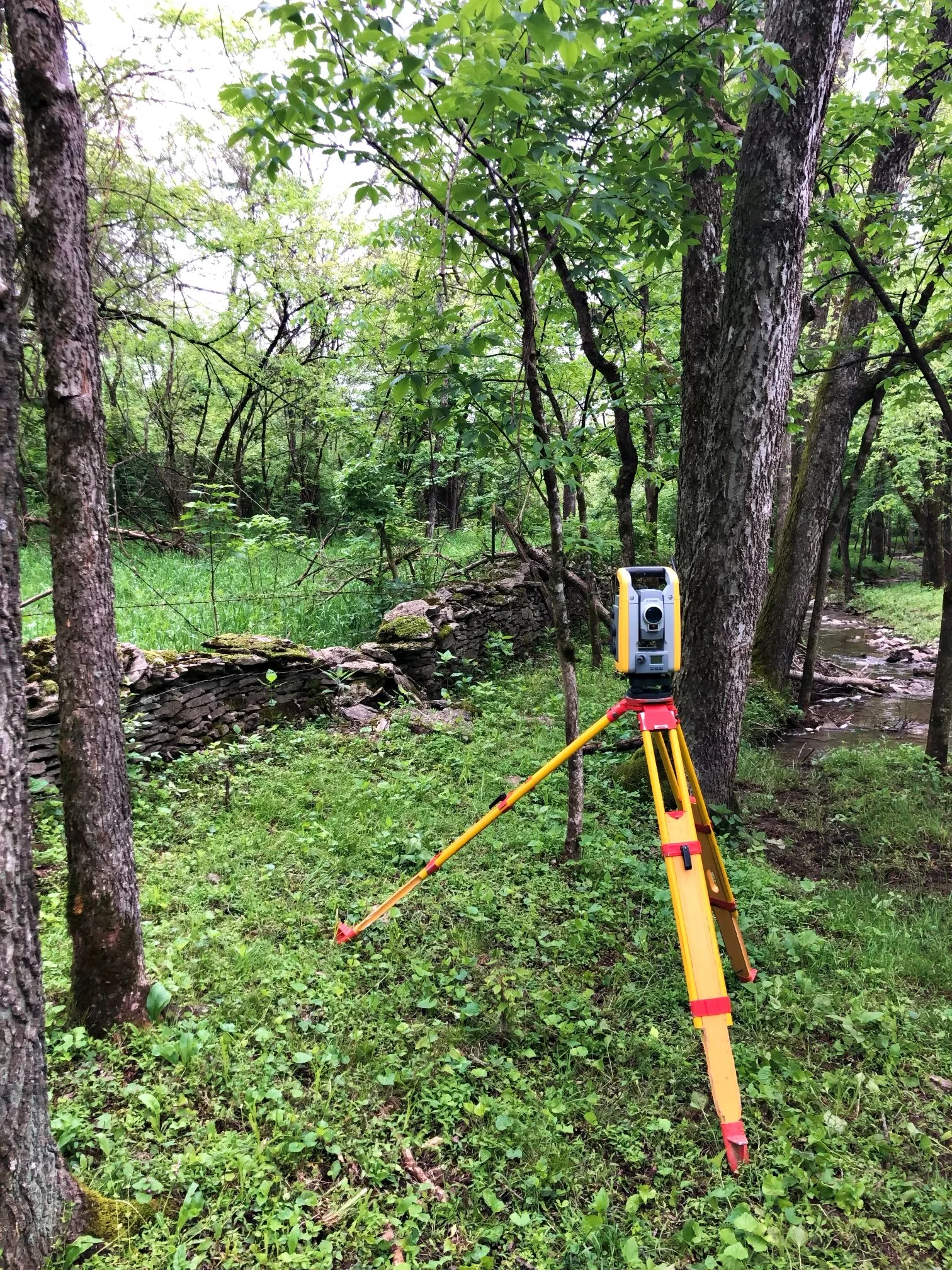
Even as technology continues to advance, surveyors remain responsible for verifying data, retracing historical property descriptions, and ensuring the accuracy of the information engineers and communities depend on.
Looking Toward the Future of Surveying
As technology continues to evolve, the role of surveyors is expanding beyond traditional measurement.
Today’s survey teams use advanced tools such as GNSS satellite positioning, LiDAR scanning, drone mapping, and digital terrain modeling software to collect and process vast amounts of spatial data more efficiently than ever before.
According to Will Graves, the profession is becoming increasingly data-driven.
“Surveyors are becoming less like simple data collectors and more like data managers and spatial analysts,” Graves said.
While new technologies continue to shape the industry, experienced surveyors agree that certain qualities will always remain essential—attention to detail, strong mathematical skills, and sound professional judgment.
As the tools evolve, the core mission of surveying remains the same: providing the accurate, reliable information engineers and communities depend on to plan and build the infrastructure of the future.
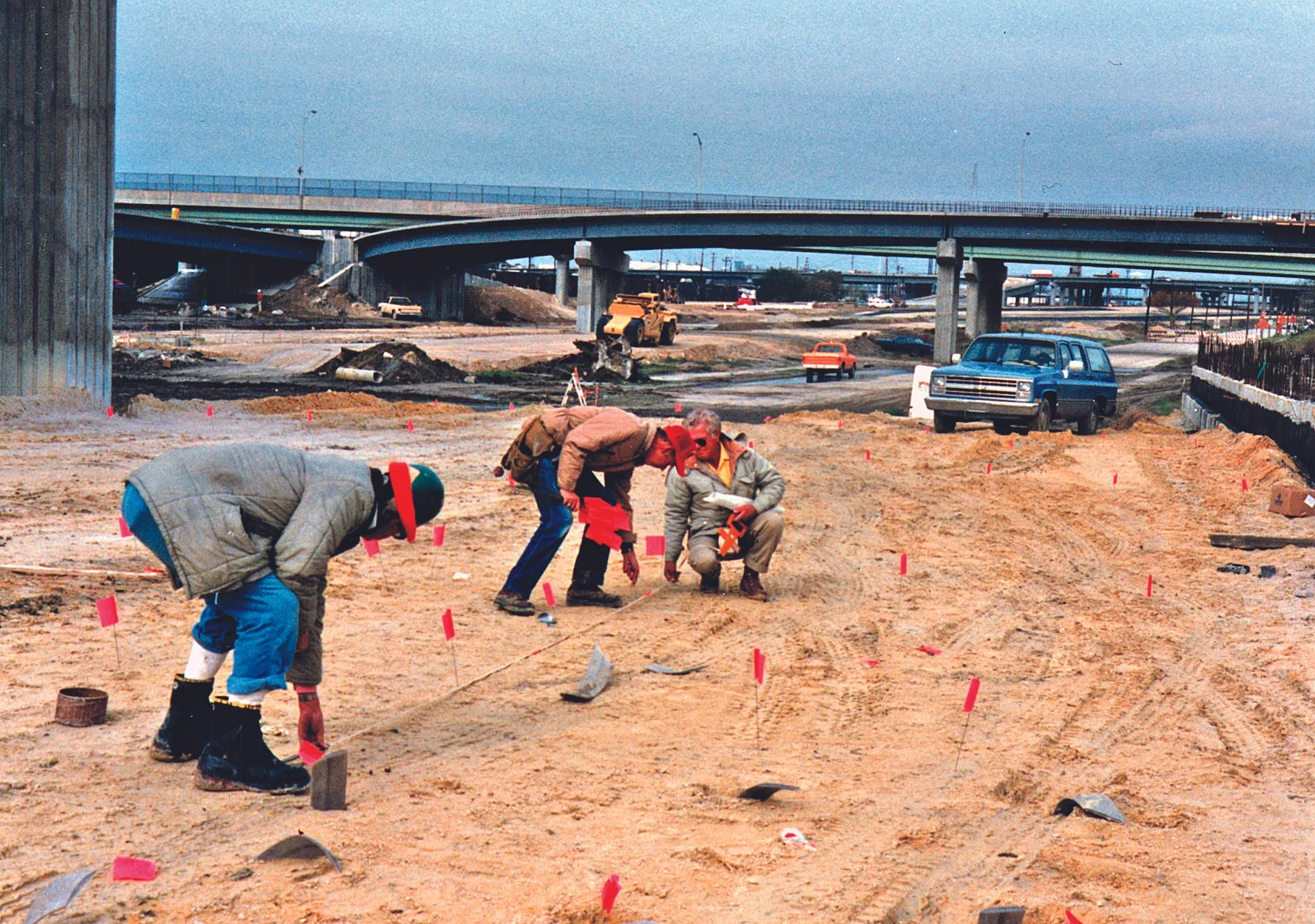
A Team Built on Experience and Purpose
Surveying often happens behind the scenes, but its impact can be seen in nearly every piece of infrastructure around us. From the earliest field measurements to the final design models, surveyors provide the accurate information that makes roads, bridges, and communities possible.
At Palmer Engineering, our survey team brings together decades of experience, technical expertise, and a shared commitment to precision. Some team members discovered surveying through mentors, others grew up around the profession, and many were drawn to the unique balance of outdoor work, technology, and problem-solving.
Together, they continue a tradition at Palmer Engineering—providing the reliable data engineers, communities, and project teams depend on to move projects forward.
As we recognize National Surveyors Week, we celebrate the professionals whose expertise, integrity, and dedication help turn measurements into the infrastructure that supports our communities everyday.