
From Plans to Progress: A Mountain Parkway Site Visit
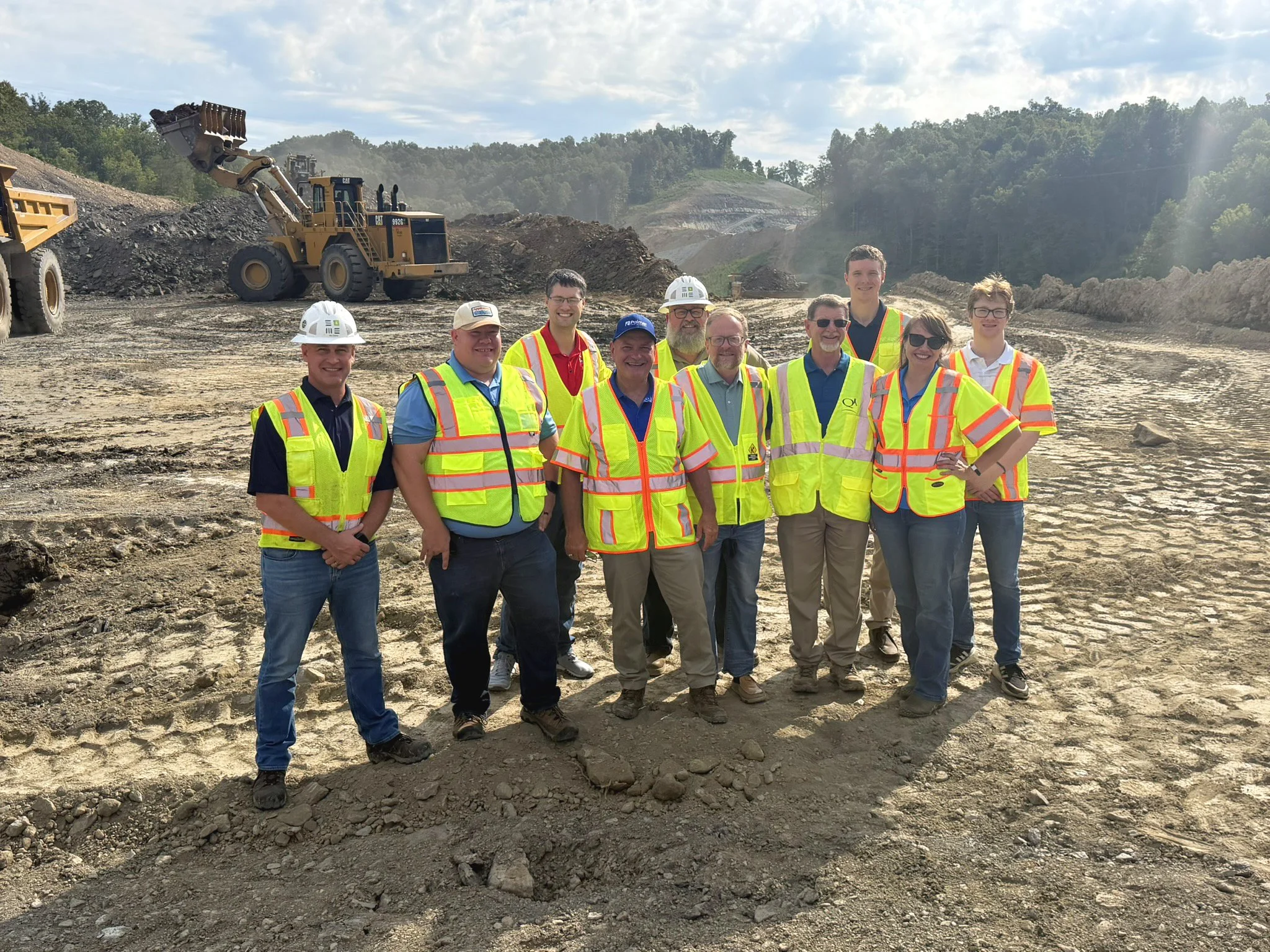
There’s a big difference between seeing a highway project on a set of plans and standing in the middle of it.
Members of the project team recently had the opportunity to see that difference firsthand during a site visit along the Mountain Parkway project in Magoffin County, where plans are becoming progress on the ground.
The visit brought together team members involved in different aspects of the project—from administering the Progressive Design-Build process to developing surfacing plans for the 13-mile Magoffin-Floyd County project section—and offered an up-close look at the scale of construction underway.
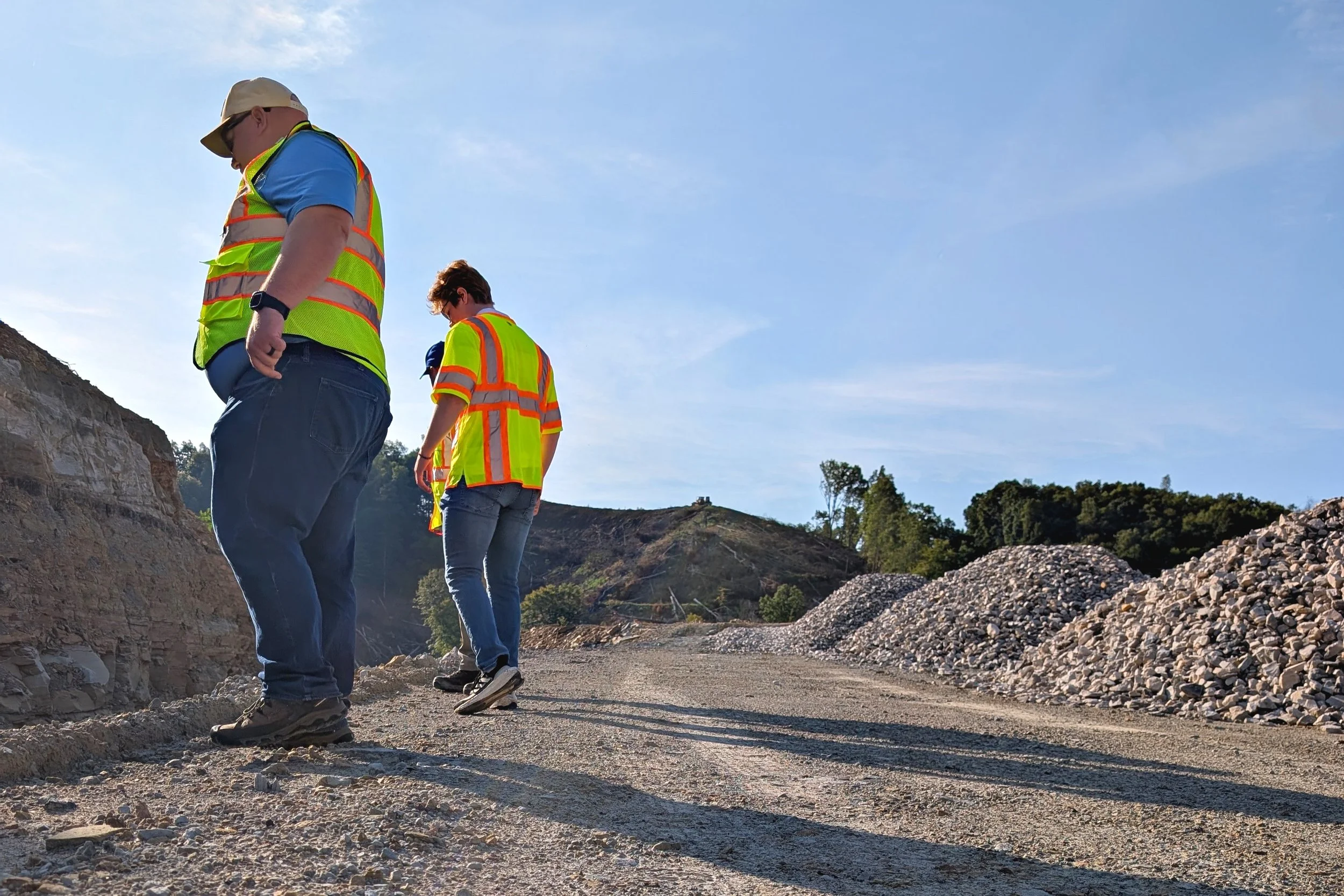
Palmer Engineering’s Billy Garrison, PE, is leading the design of the surfacing plans for all 13 miles of the Magoffin-Floyd County segment. The site visit offered a firsthand look at the terrain and current construction activity.
Joining the visit were Randy Ehresman, Project Manager, and Reid Johnson, Project Engineer, with American Structurepoint, Inc. (ASI). ASI is assisting the Kentucky Transportation Cabinet with administering the Progressive Design-Build process for the Mountain Parkway. Ehresman and Johnson were in town from Texas for the 2026 Partnering Conference, creating the opportunity to visit portions of the project they have helped plan.
The group toured areas of the project primarily in Magoffin County, including locations near Wampum Access Road and the Dawkins Trail bridge, getting an up-close look at the progress being made by Bizzack Construction. While plans and numbers tell part of the story, seeing the work in person puts the sheer scale of the project into perspective.
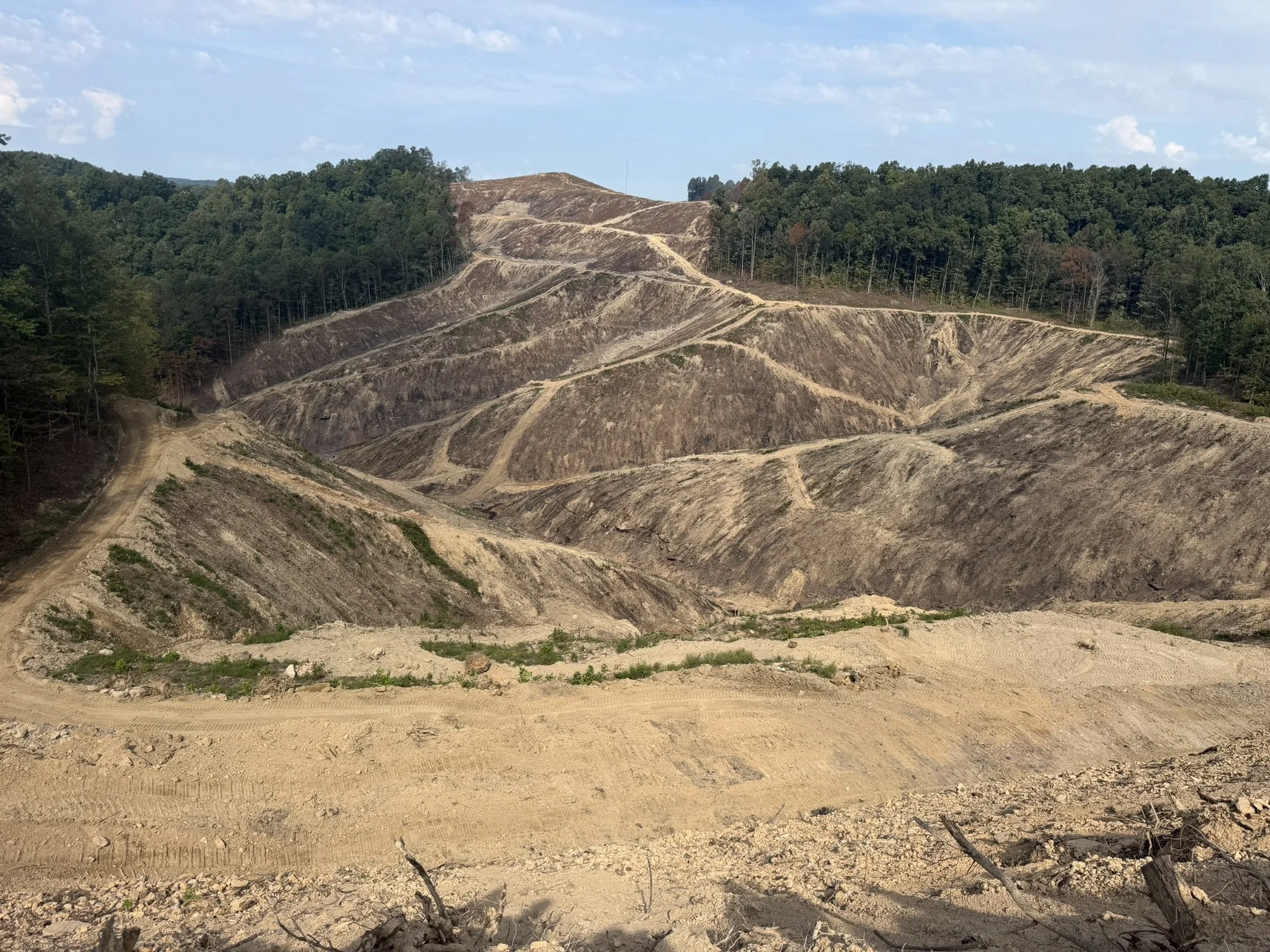
Moving 1.1 Million Cubic Yards of Material
One stop took the group to the east side of the mountain beyond the Dawkins Trail bridge, where the area has recently been cleared and smaller temporary access paths have been dozed into the mountainside. Those paths will be used—and removed as necessary—as crews bring fill into the area. Approximately 1.1 million cubic yards of fill will be placed in this area alone.
Moving that much material requires some equally impressive equipment. During the visit, the group got an up-close look at a massive CAT loader at work. According to the equipment operator, it takes approximately three scoops from the loader to fill one of the site’s haul trucks. Crews also work with blasted layers approximately 25 to 30 feet deep, allowing the loader to efficiently scoop and move material.
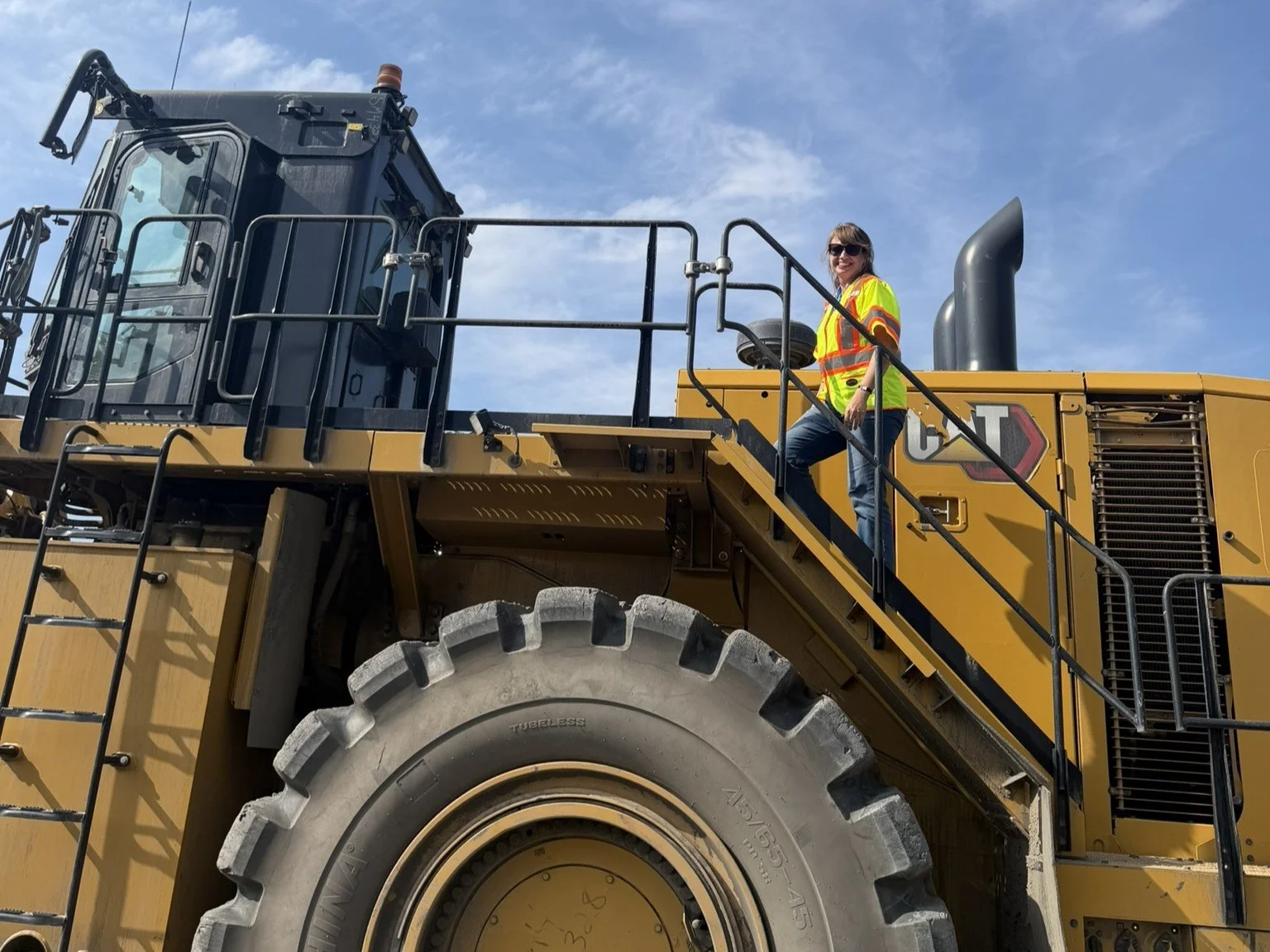
Palmer engineer Chelsea DeWitt, PE, got a firsthand look at the loader in action—and a view from inside the cab—offering a whole new perspective on what it takes to move enough material to reshape the terrain for a modern highway.
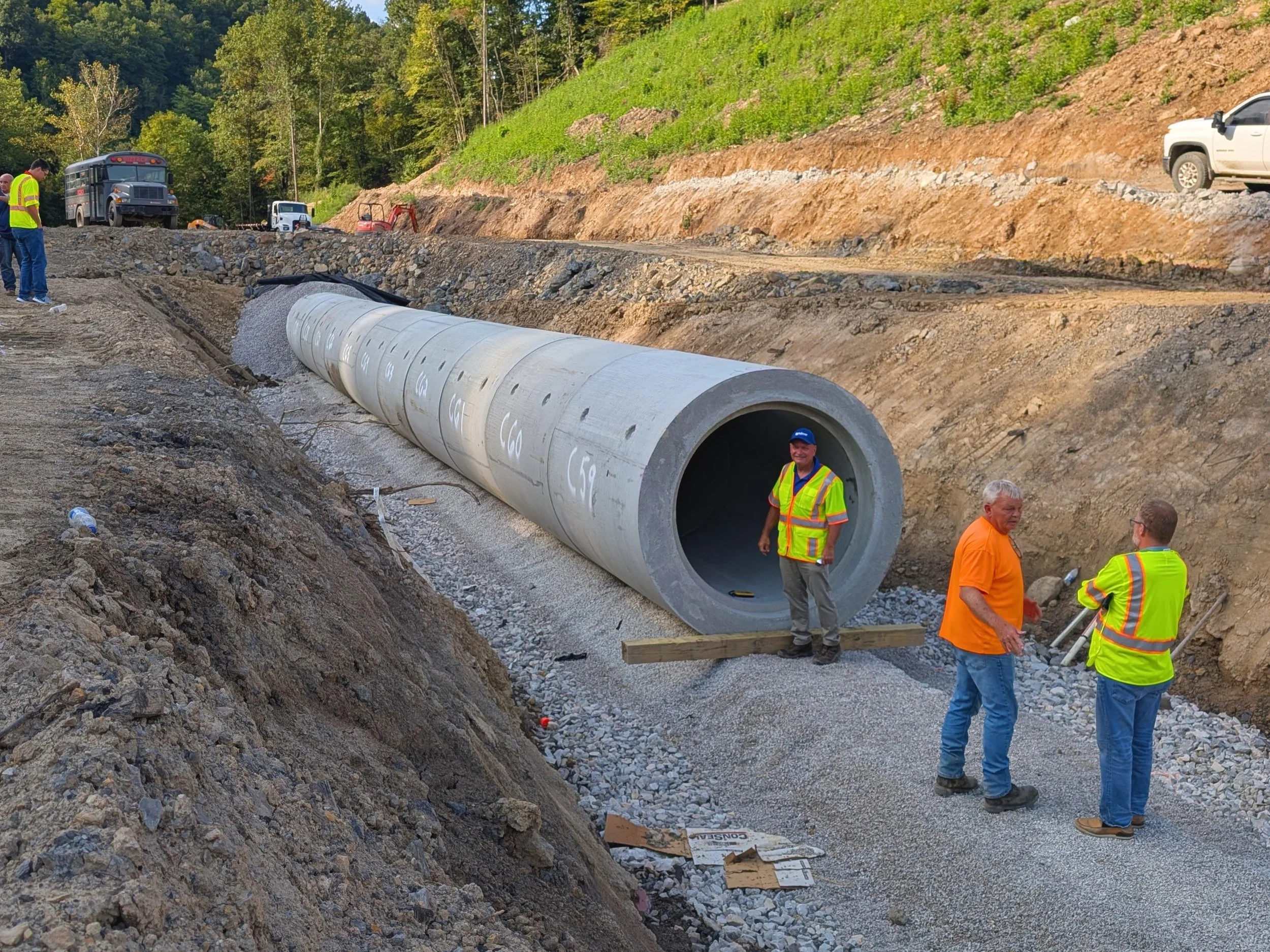
The size of the pipe is impressive on its own, but it becomes even more apparent when standing next to—or even inside—one of the sections.
Nearly 850 Feet of Infrastructure Beneath the Roadway
Another stop provided a look at an important part of the project that future motorists may never realize is there. Crews are installing a special design concrete pipe culvert that will extend approximately 847 feet beneath the roadway. The run consists of approximately 106 individual eight-foot sections of pipe, each with a 60-inch interior diameter.
At this depth, a box culvert might typically be considered. However, this location did not require the additional flow capacity a box culvert would provide, allowing the team to use the specially designed concrete pipe instead.
Once construction is complete and the roadway is in place, this infrastructure will largely disappear from view, but it will continue serving an important drainage function beneath the highway.
Seeing the Plans Take Shape
Site visits like this give the people involved in designing, administering and constructing a project an opportunity to see how decisions made during the planning and design process translate to conditions in the field.
Eventually, drivers will travel this stretch of the Mountain Parkway without seeing much of the work that made the finished roadway possible. But beneath the pavement and behind every mile are countless design decisions, loads of material and pieces of infrastructure—all working together to move the Mountain Parkway project forward.
Learn More About the Mountain Parkway
Want to learn more about the work happening along the Mountain Parkway? Check out these additional pages and stories for a closer look at the project, its progress and the people helping move it forward:
How Excavated Material is Reused on the Mountain Parkway Expansion
Behind Every Mile: Turning Plans into Progress on the Mountain Parkway Expansion