
How Do Engineers Decide When a Roundabout Is the Right Choice?
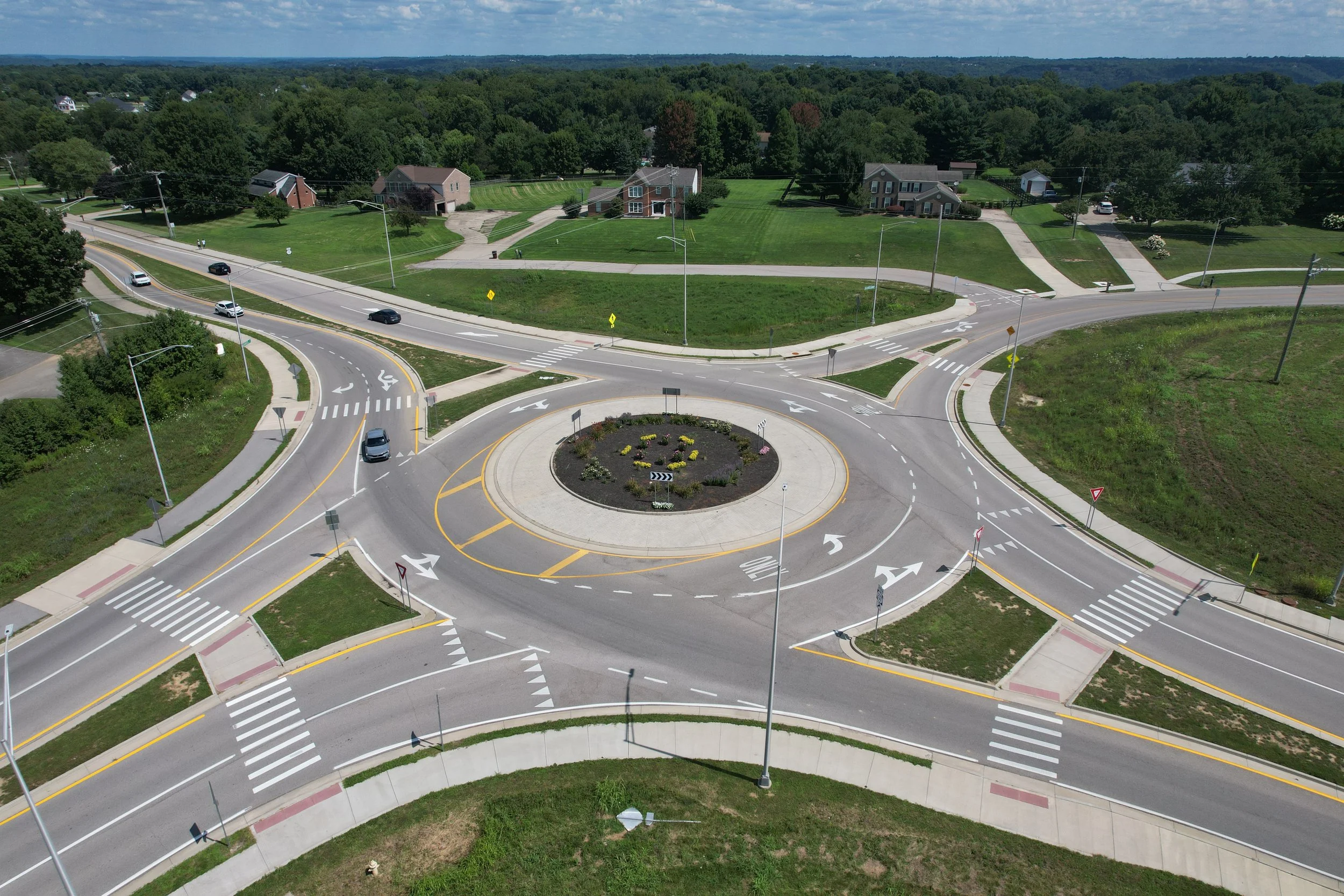
In recognition of National Roundabouts Week, we’re taking a closer look at the engineering and decision-making behind these increasingly familiar intersections. Roundabouts can help keep traffic moving, reduce speeds and improve safety — but how do engineers determine when one is the right solution for a particular location?
Photo: Roundabout at North Bend Road (KY 237) in Boone County, Kentucky, completed as part of the Graves Road (KY 495) Interchange Project.
There isn’t a single answer. Traffic volumes and patterns, crash history, available right-of-way, construction costs, utilities and the physical characteristics of the surrounding area can all play a role.
For Palmer Engineering President Stephen Sewell, PE, a roundabout is often one of the first potential solutions worth evaluating.
“Lots of things go into the selection, such as the types of crashes, traffic volumes and routes, and physical restrictions,” Sewell said. “For me, a roundabout is always at the top of the potential solutions to evaluate with the tools we use.”
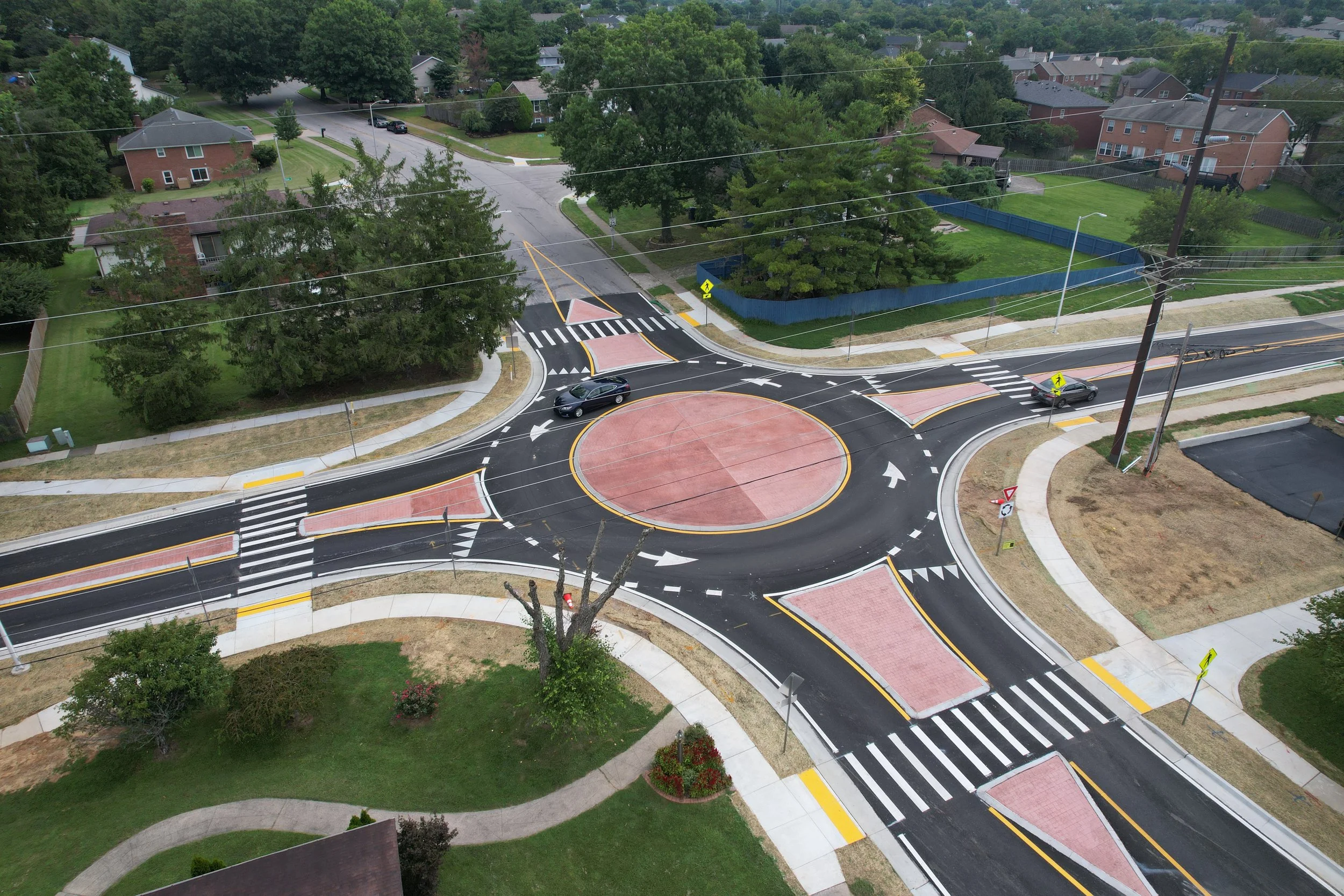
Palmer Engineering helped design improvements to Wilson Downing Road in Lexington, Kentucky, including the city’s first neighborhood mini-roundabout, which replaced a four-way stop.
Looking at the Whole Intersection
Choosing an intersection design involves much more than looking at the number of vehicles traveling through it.
Palmer traffic engineer Joshua Samples, PE, said engineers evaluate factors including traffic simulations, construction costs, right-of-way and utility impacts, and safety.
A roundabout may perform well from a traffic standpoint, for example, but require too much additional right-of-way because of nearby homes or businesses. At another location, traffic volumes could be too high for a particular roundabout design to operate effectively.
Traffic volumes can also be too low to justify the additional construction cost compared with a more traditional intersection.
That’s why engineers evaluate different alternatives rather than applying the same solution everywhere. Traffic analysis software can help compare how a roundabout, traffic signal, turn lanes or other improvements would perform.
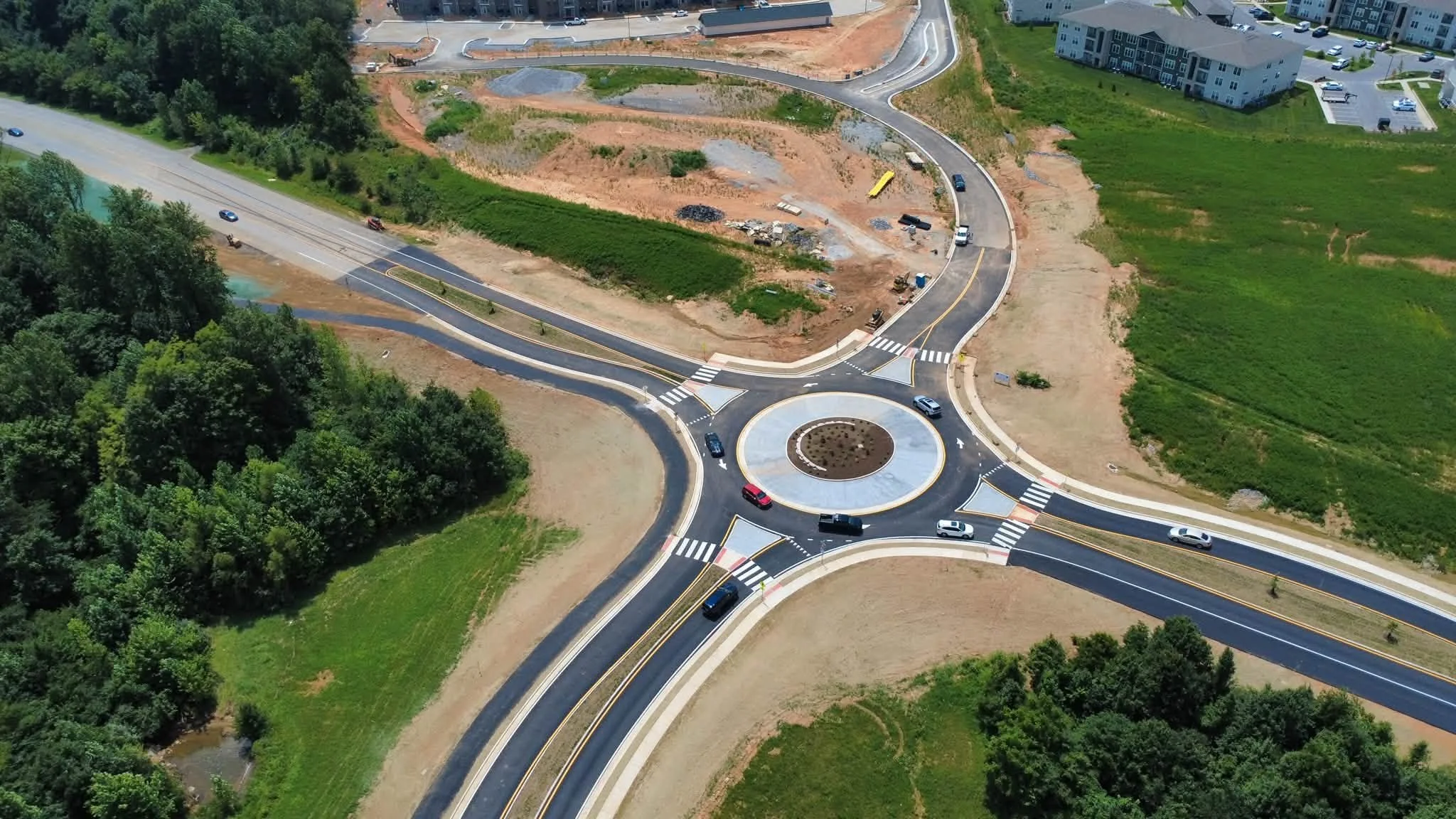
Palmer Engineering designed the City of Elizabethtown’s first city-funded roundabout at Veterans Way and Towne Drive to improve safety and traffic flow.
Solving More Than One Problem
Sometimes a roundabout can address several challenges at once.
Sewell points to Palmer’s work at Towne Drive and Veterans Way in Elizabethtown, KY as an example. The roundabout helped slow vehicle speeds while also making it easier for drivers to turn left from Veterans Way.
Before the roundabout, that movement was difficult and could result in traffic backups. The new configuration allows vehicles to move through the intersection more efficiently, with fewer delays.
It’s an example of what engineers are ultimately looking for when evaluating an intersection: not simply whether a roundabout can be built, but whether it addresses the particular transportation challenges at that location.
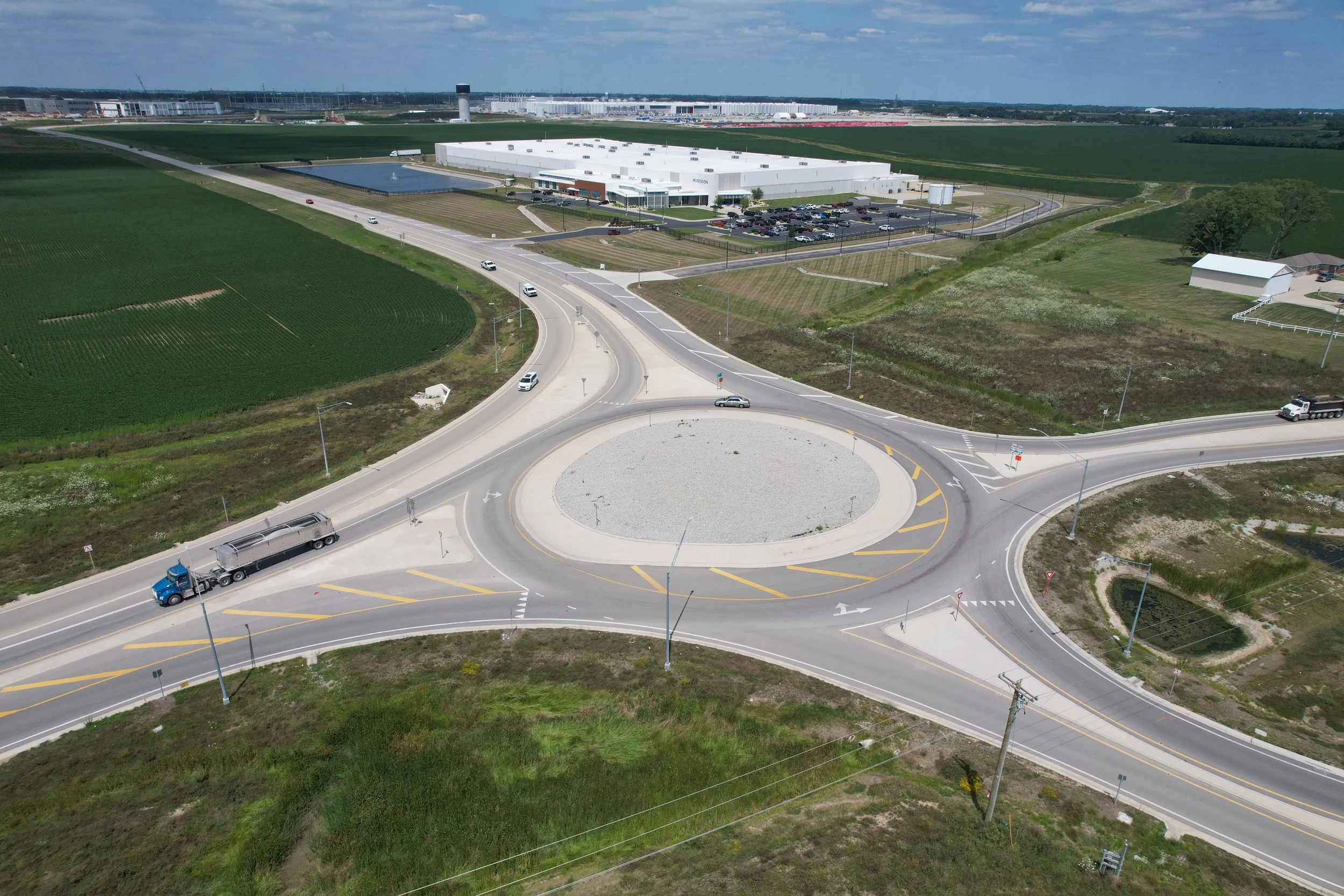
This multilane roundabout in Fayette County, Ohio, was designed to improve capacity and safety along the SR 435 corridor as the area continues to grow.
Planning for Growth in Fayette County, Ohio
A Palmer project in Fayette County, Ohio, shows how a roundabout can also be part of a much larger response to growth and changing traffic demands.
According to Dan Ficker, PE, Palmer’s project manager and lead designer for the project, the work grew out of an interchange operations and capacity study prompted by development in the area, including the Honda/LG battery plant. The existing signalized intersection was expected to be over capacity for future traffic, and a multilane roundabout was identified as the preferred option from both a capacity and safety standpoint.
The roundabout was constructed as part of a larger design/build project that added capacity along the SR 435 corridor. The accelerated schedule also presented some interesting design and construction challenges. The roundabout had to be built while maintaining traffic, and engineers had to account for oversized construction vehicles delivering materials to the battery plant.
The design also considered large vehicles and farm equipment, as well as future expansion — another example of how engineers have to think not only about how an intersection operates today, but how it will need to function in the years ahead.
Addressing Safety Within a Butler County Neighborhood
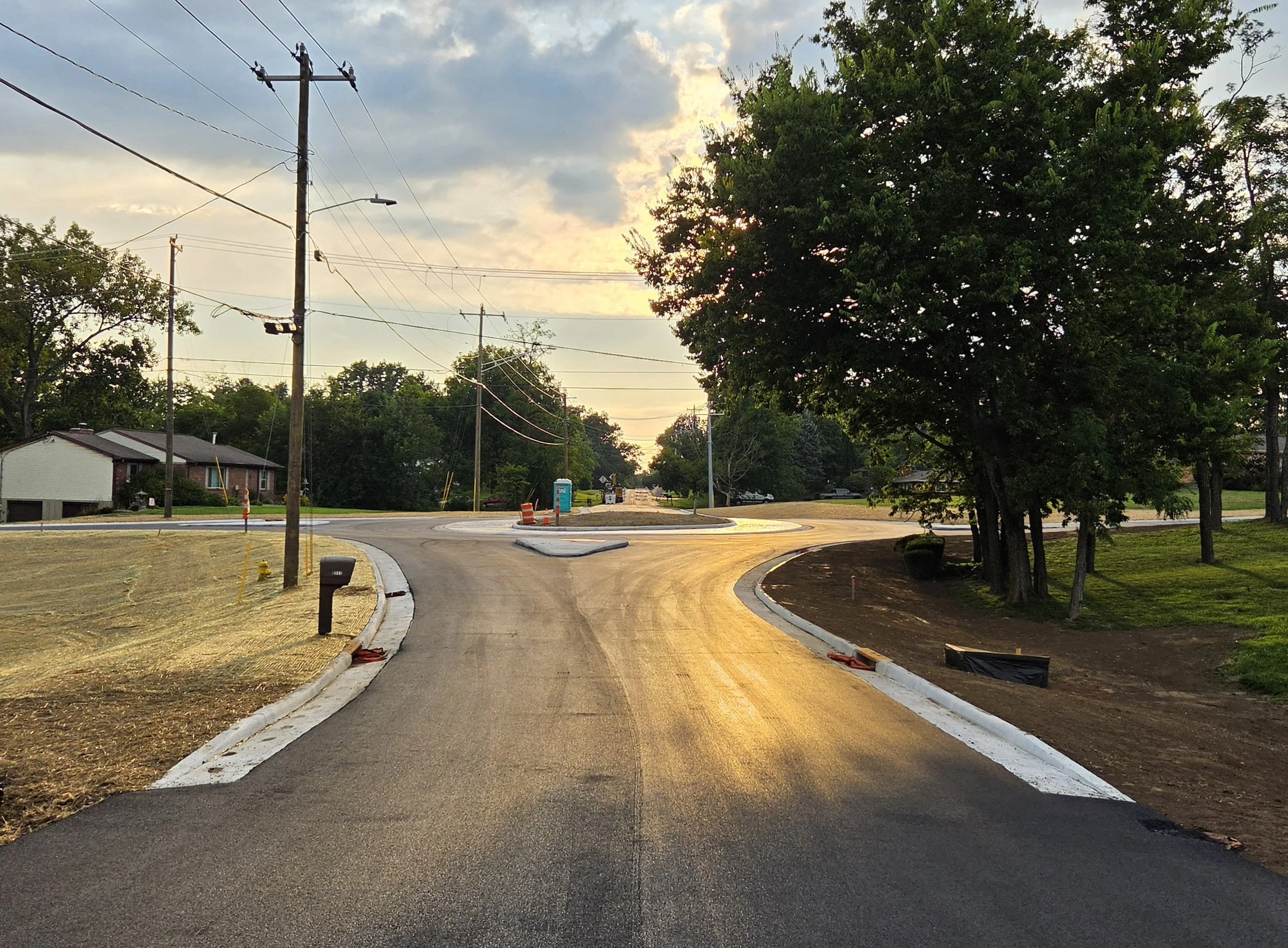
This compact, single-lane roundabout at Dimmick Road and McCauley Road in Butler County, Ohio, was designed to improve safety and traffic flow while minimizing impacts to the surrounding residential community.
The roundabout at Dimmick Road and McCauley Road in Butler County, Ohio, presented a different set of challenges.
According to Ficker, the existing four-way stop was experiencing more crashes than would typically be expected at an all-way stop intersection. West Chester Township officials had also raised concerns about safety and congestion, leading the Butler County Engineer’s Office to conduct a safety study and evaluate potential improvements.
The study compared two alternatives: a traffic signal and a compact urban, single-lane modern roundabout. The roundabout was predicted to have a lower average crash frequency and also performed better operationally more than 20 years into the future.
The surrounding neighborhood was another important consideration. Because Dimmick and McCauley roads run through an established residential area with limited available right-of-way, the turn lanes required for the traffic signal alternative would have resulted in property and residential impacts.
Instead, the compact roundabout was designed to fit within those constraints, minimizing right-of-way impacts while addressing the intersection’s safety and operational needs.
Finding the Right Solution for the Right Place
From busy roadways to growing developments and neighborhood settings, every intersection comes with a different combination of traffic patterns, physical constraints and community needs.
Roundabouts are an important option in the transportation engineer’s toolbox, but selecting one still requires analysis. By studying how people use an intersection, evaluating safety and traffic operations, considering the surrounding property and infrastructure, and comparing potential alternatives, engineers can determine the solution that best fits each location.