
Making Everyday Connections Safer: National Pedestrian Safety Month 2026
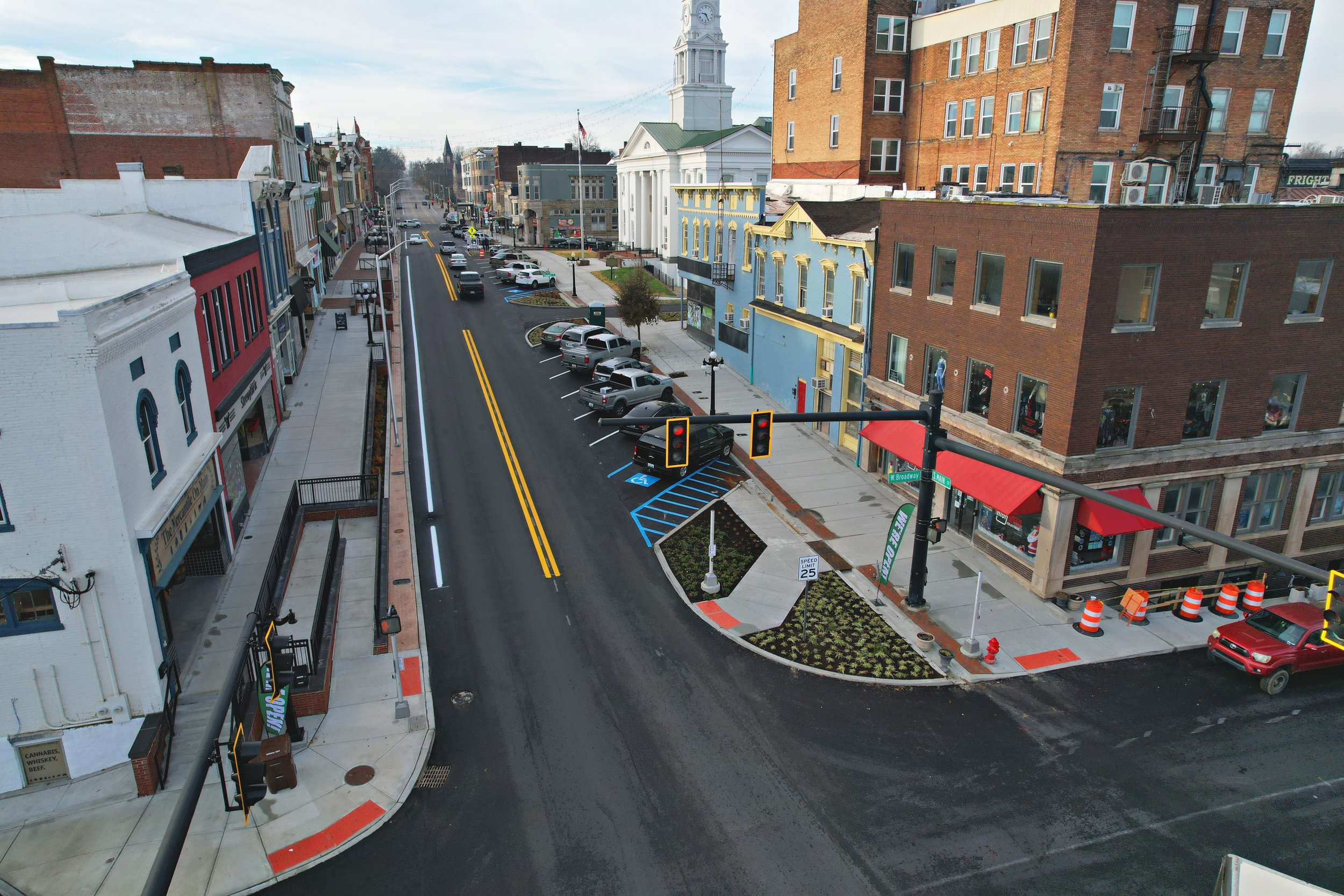
October is National Pedestrian Safety Month, a reminder to slow down, stay alert, and consider the people traveling on foot. At Palmer Engineering, it’s also an opportunity to highlight how thoughtful roadway design can help make those everyday trips safer and more accessible.
Photo: Downtown Winchester, Kentucky
Why Pedestrian Safety Matters
According to the National Highway Traffic Safety Administration (NHTSA), 7,080 pedestrians were killed and more than 71,000 were injured in traffic crashes nationwide in 2024. That represents one pedestrian death every 74 minutes. Behind each number is a person, a family, and a community affected.
Sidewalks, accessible crossings, and connections to schools, businesses, and transit stops all play a role in addressing pedestrian safety. Across Kentucky, Palmer’s teams have worked with local and state partners to design improvements that respond to these needs.
This work takes many forms—from adding sidewalks in established neighborhoods to improving crossings near schools and connecting transit riders to their workplaces. In recognition of National Pedestrian Safety Month, we’re highlighting a few projects that show how these improvements help people get where they need to go safely.
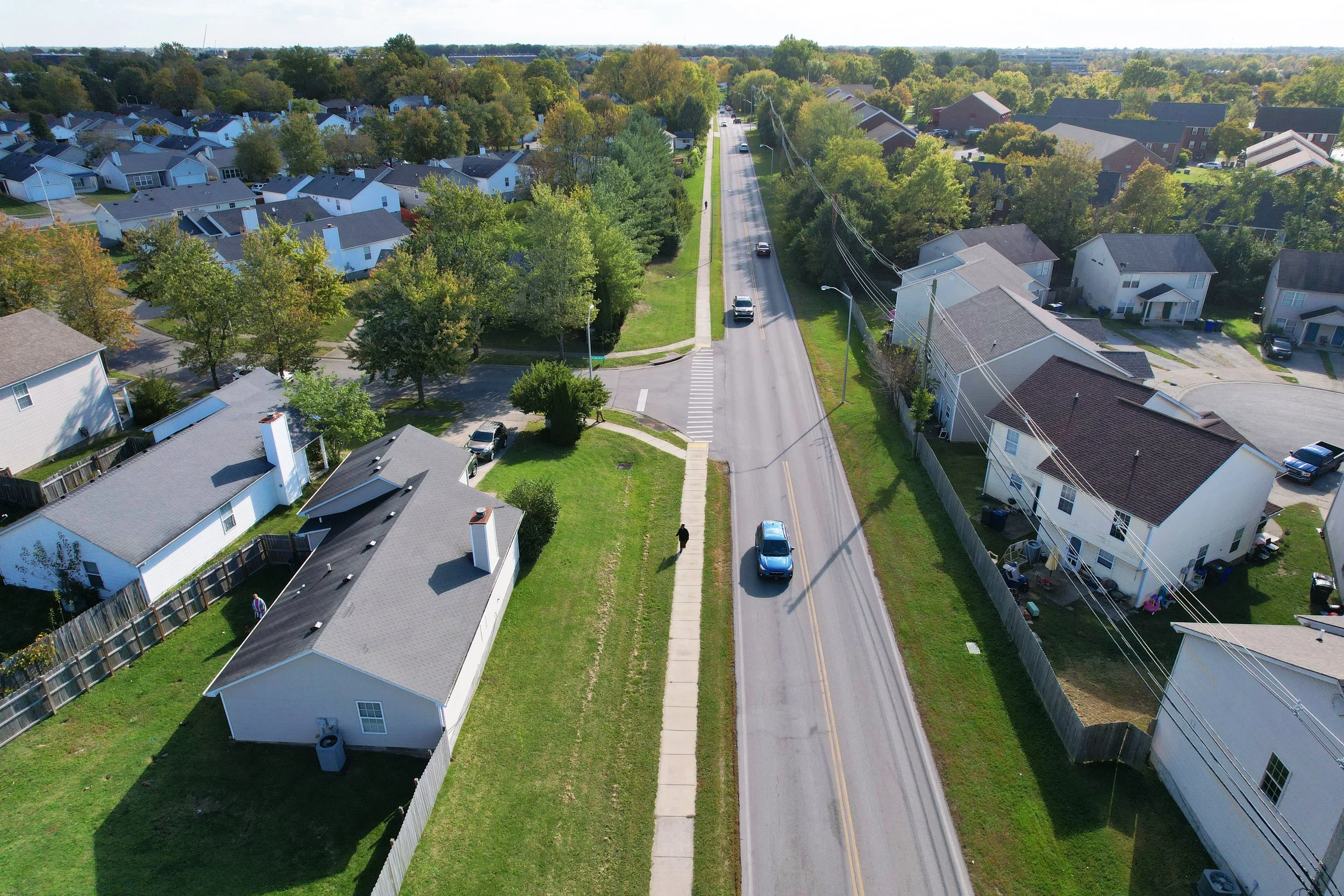
Old Todds Road Sidewalk Improvements | Lexington, Kentucky
Along a busy residential corridor in Lexington, Kentucky, Palmer designed a 0.6-mile sidewalk installation to provide a safer, more accessible route for people walking along Old Todds Road.
Our team developed the plans within the existing right of way, coordinating closely with utility companies to minimize relocations. The project also included reconstructing three approaches to meet Americans with Disabilities Act (ADA) requirements. Palmer prepared bid documents and assisted the City of Lexington through the Local Public Agency process.
Today, the completed sidewalks continue to serve residents and support everyday pedestrian travel.
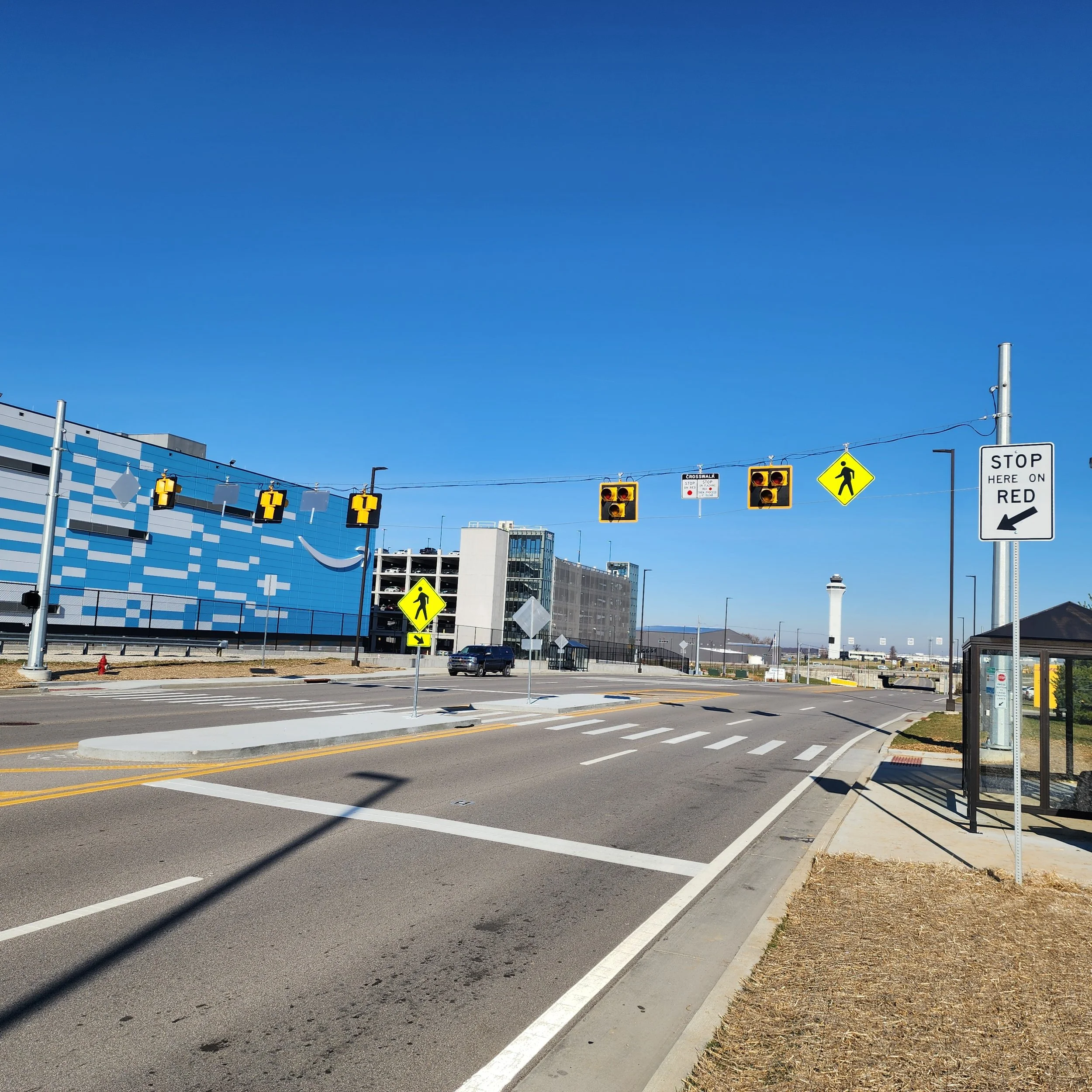
Wendell H. Ford Boulevard Pedestrian Crossing | Northern Kentucky
When the Transit Authority of Northern Kentucky (TANK) established a bus route from Florence to serve employees at nearby Amazon and DHL facilities, the area needed a suitable bus turnaround and a safer way for passengers to cross Wendell H. Ford Boulevard.
Palmer worked with local stakeholders to design and oversee construction of a High-Intensity Activated Crosswalk (HAWK), along with a new bus stop and shelter.
Together, these improvements provide an ADA-accessible pedestrian connection between transit and employment—helping people navigate an important part of their daily commute.
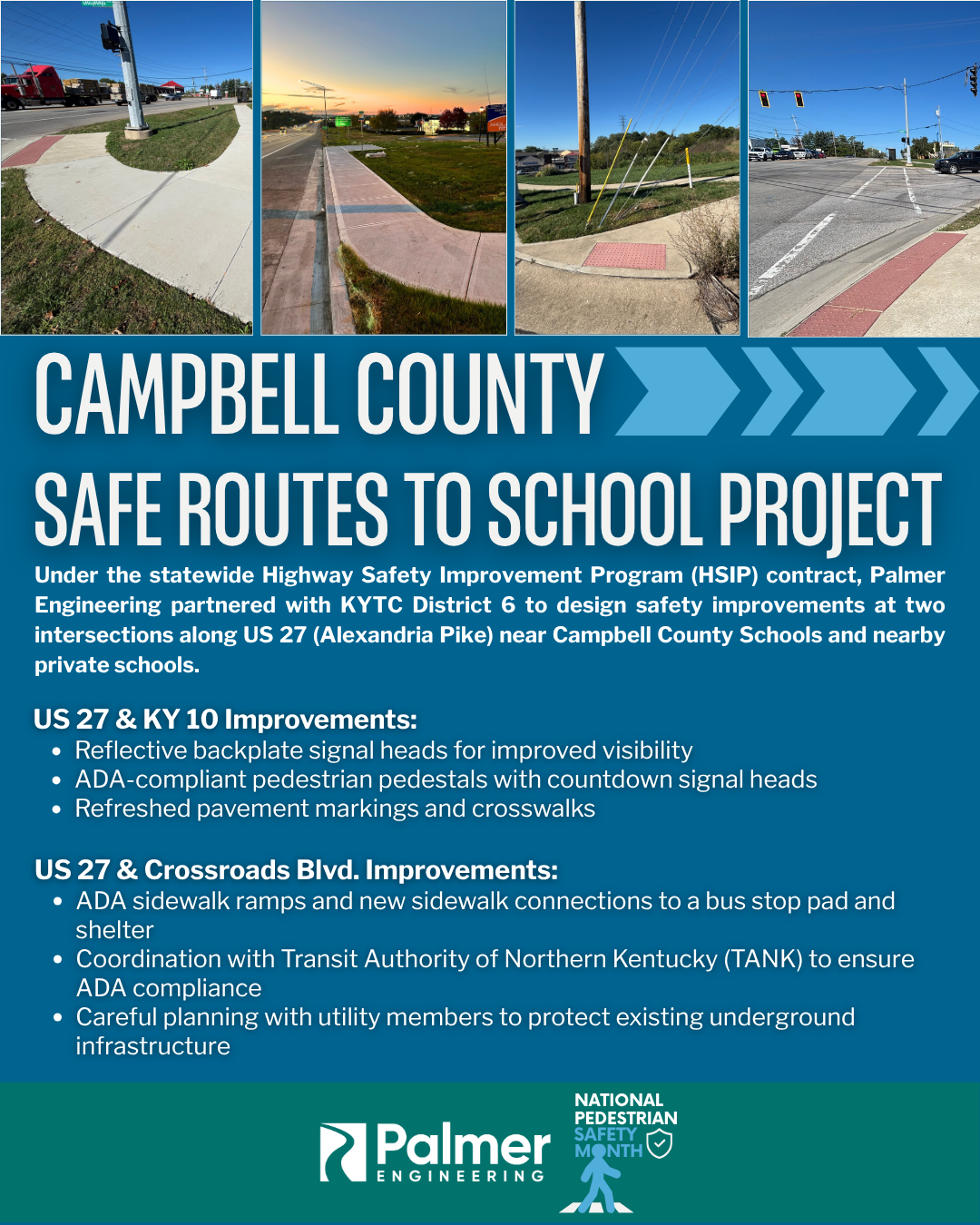
US 27 Intersection Improvements | Campbell County, Kentucky
Near Campbell County Schools and nearby private schools, Palmer partnered with Kentucky Transportation Cabinet District 6 to design safety improvements at two intersections along US 27, also known as Alexandria Pike.
Developed through the statewide Highway Safety Improvement Program, the project included signal enhancements, ADA-compliant features, and improvements to crosswalks and sidewalks. The work focused on visibility, accessibility, and pedestrian connections for students, families, and other community members.
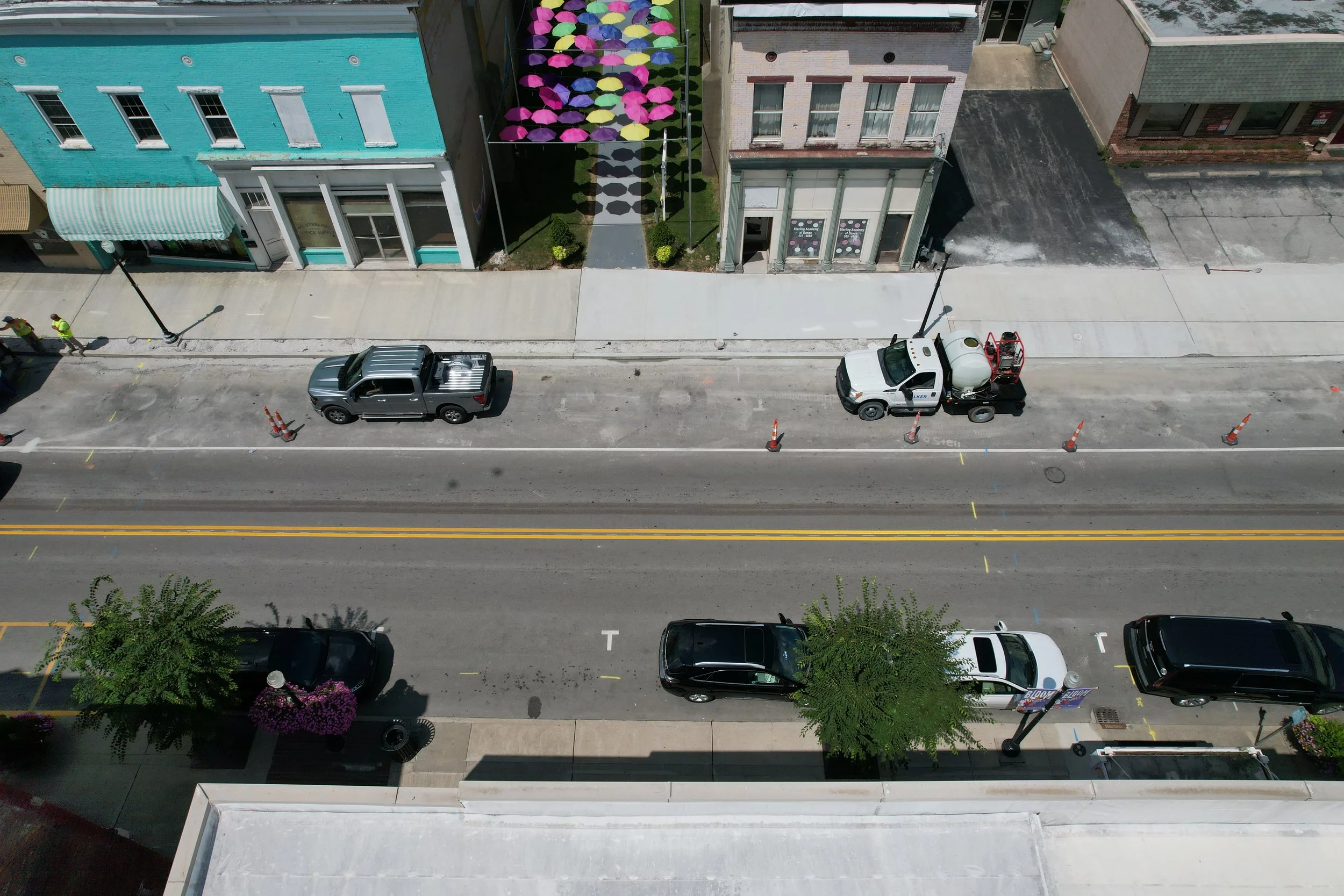
South Maysville Road Streetscape and Trail Connections | Mt. Sterling, Kentucky
In downtown Mt. Sterling, Palmer provided roadway design and streetscape services for South Maysville Road, from Main Street to the Adena Trail crossing.
The design included curbs, landscaping, parking adjustments, and bicycle and pedestrian areas. Eliminating multiple steps between the roadway and businesses allowed the team to address cross slopes and improve accessibility.
Main Street “High Side” Improvements | Winchester, Kentucky
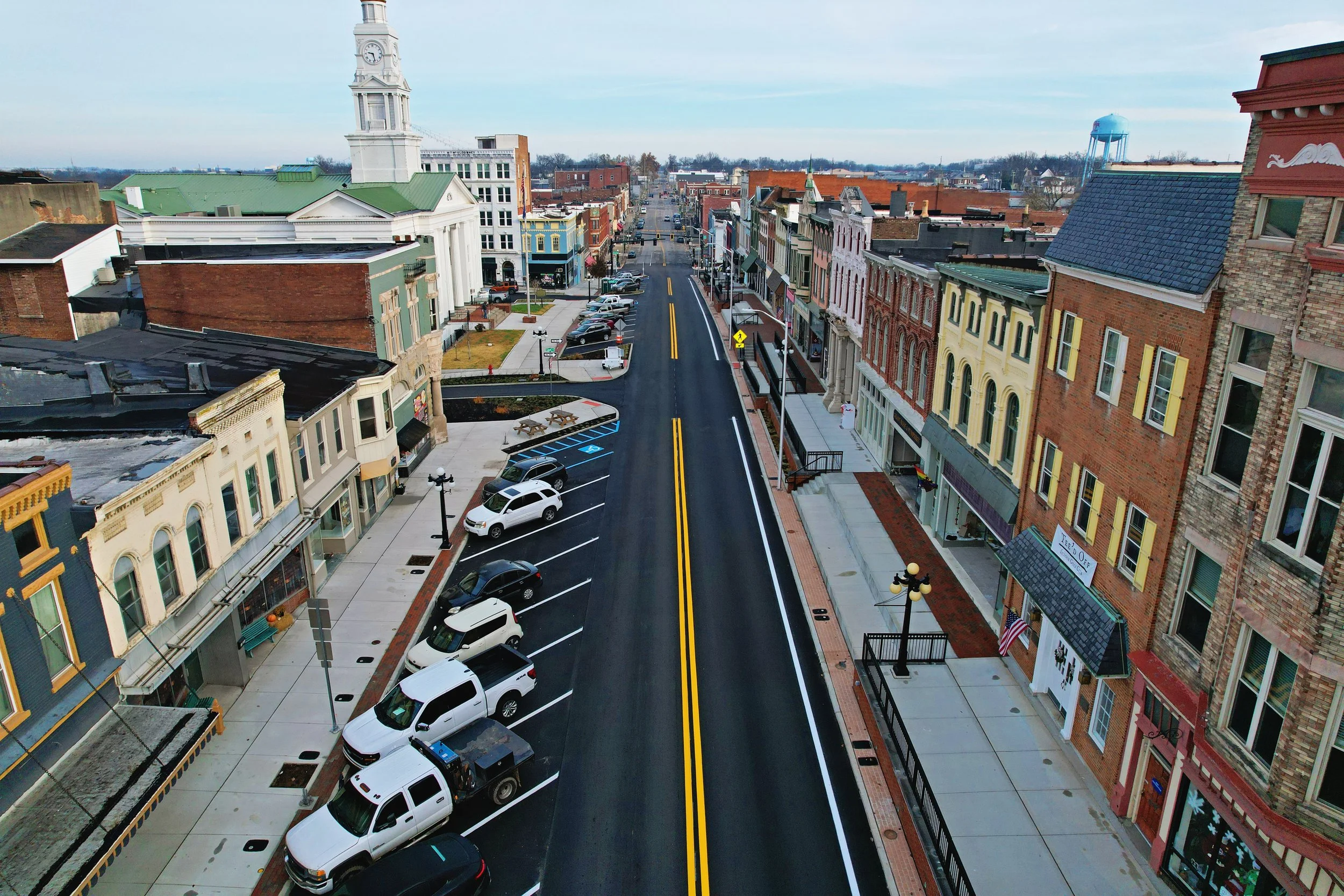
In downtown Winchester, Palmer helped transform a 700-foot section of Main Street in front of the courthouse to improve pedestrian accessibility and safety while creating more space for people to gather.
The project removed the elevated sidewalk steps known as the “High Side” and added curb bulb-outs to shorten pedestrian crossing distances. A decorative gravity wall expanded pedestrian space, while new social stairs provided seating for public gatherings and parade viewing. Pull-in angled parking replaced the existing parallel parking.
Palmer provided survey, design, construction administration, and construction inspection services for the City of Winchester. Having the design and construction services teams in-house supported close coordination and efficient resolution of field conditions throughout construction. Completed in spring 2026, the project offers a more accessible and welcoming downtown environment for residents and visitors.
Small Choices Make a Difference
Infrastructure improvements work alongside the choices we make on the road. NHTSA offers these reminders:
For drivers:
Follow posted speed limits, especially near schools and in neighborhoods.
Watch for pedestrians when turning, backing up, or approaching crosswalks.
Yield to people in crosswalks and leave enough space for other drivers to see them.
Never pass a vehicle stopped at a crosswalk.
Use extra caution at night and in bad weather.
For people walking:
Use sidewalks when available. Where there is no sidewalk, face traffic and stay as far from vehicles as possible.
Cross at crosswalks or intersections whenever possible.
Follow pedestrian signals and keep watching for traffic as you cross.
Watch for vehicles entering driveways or backing out of parking spaces.
Make eye contact with drivers when possible and wait for a complete stop before crossing.
With Halloween approaching, these habits are especially helpful as children and families head out for neighborhood activities. Take your time, watch carefully, and give people walking plenty of room.
Supporting Safer Everyday Travel
Pedestrian improvements connect people to the places they need to go. Whether it’s a neighborhood sidewalk, a crossing near a school, or a route from a bus stop to work, Palmer is proud to help communities make those connections safer and more accessible.
For additional safety tips and resources, visit NHTSA’s pedestrian safety page.