
Beyond the Runway: Keeping Aviation Moving
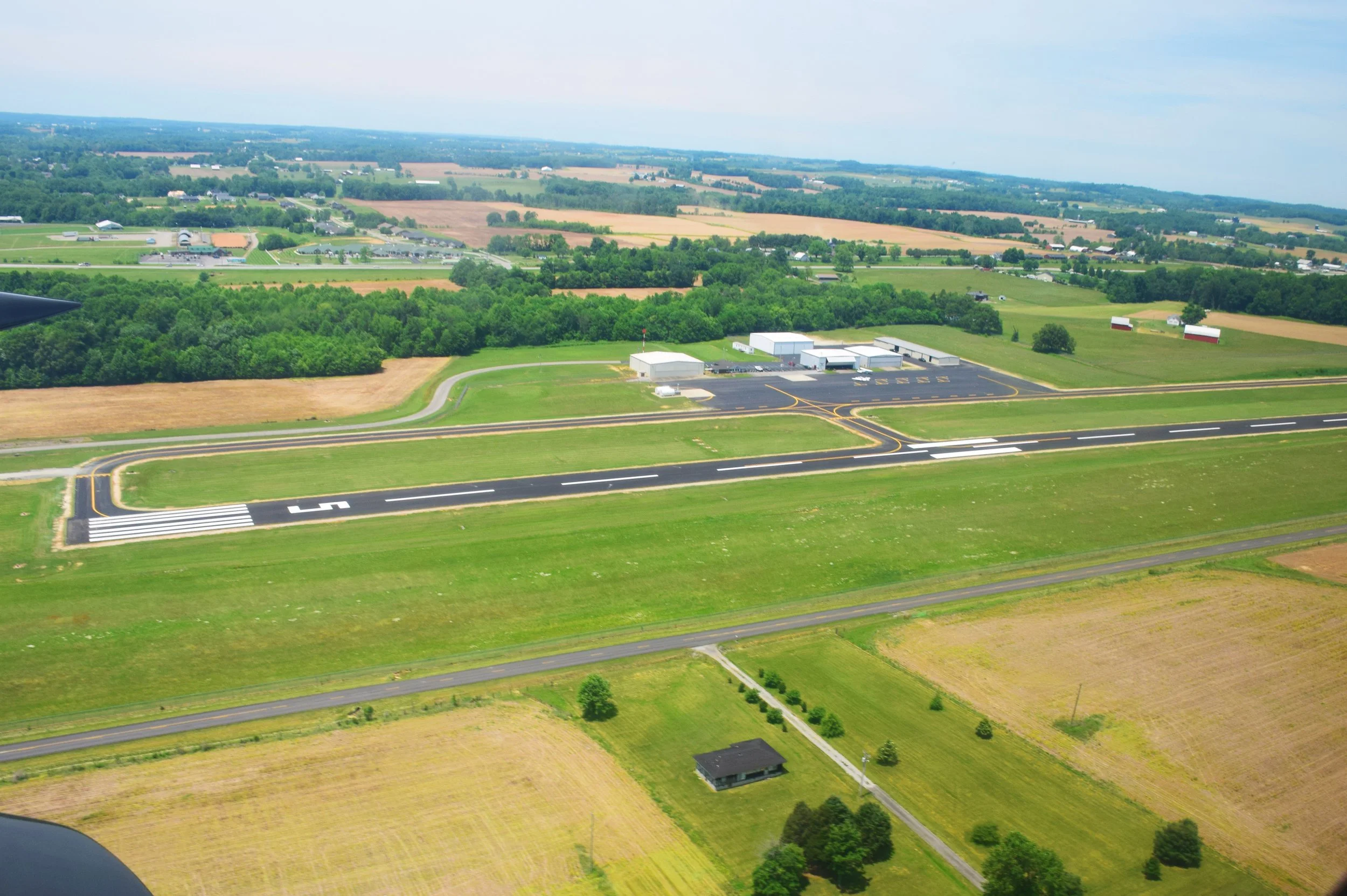
Each year, National Aviation Week, August 19–25, celebrates the people, innovation, and infrastructure that keep aviation moving. While aircraft may be the most visible part of the industry, every successful flight depends on a network of infrastructure on the ground—from runways and taxiways to roadways, drainage systems, parking facilities, terminals, and hangars.
Photo: Taylor County Airport in Kentucky
At Palmer Engineering, our aviation work brings together planning, pavement engineering, transportation, and design expertise to help airports maintain their existing infrastructure while preparing for future needs.
A strong aviation system starts with a strong foundation. Palmer has extensive experience evaluating and improving airport pavements, including runways, taxiways, and aprons. Through statewide Airport Pavement Management and Analysis contracts, Palmer conducted field data collection and contributed to Pavement Condition Index (PCI) assessments and graphical summaries for 53 airports across Kentucky. Since 2022, Palmer has also provided pavement engineering services to the Kentucky Department of Aviation, supporting pavement specifications, rehabilitation designs, pilot projects, and the evaluation of innovative pavement technologies. These efforts help airport owners better understand pavement conditions and identify practical strategies for maintaining and extending the life of critical infrastructure.
Engineering for Airports of All Sizes
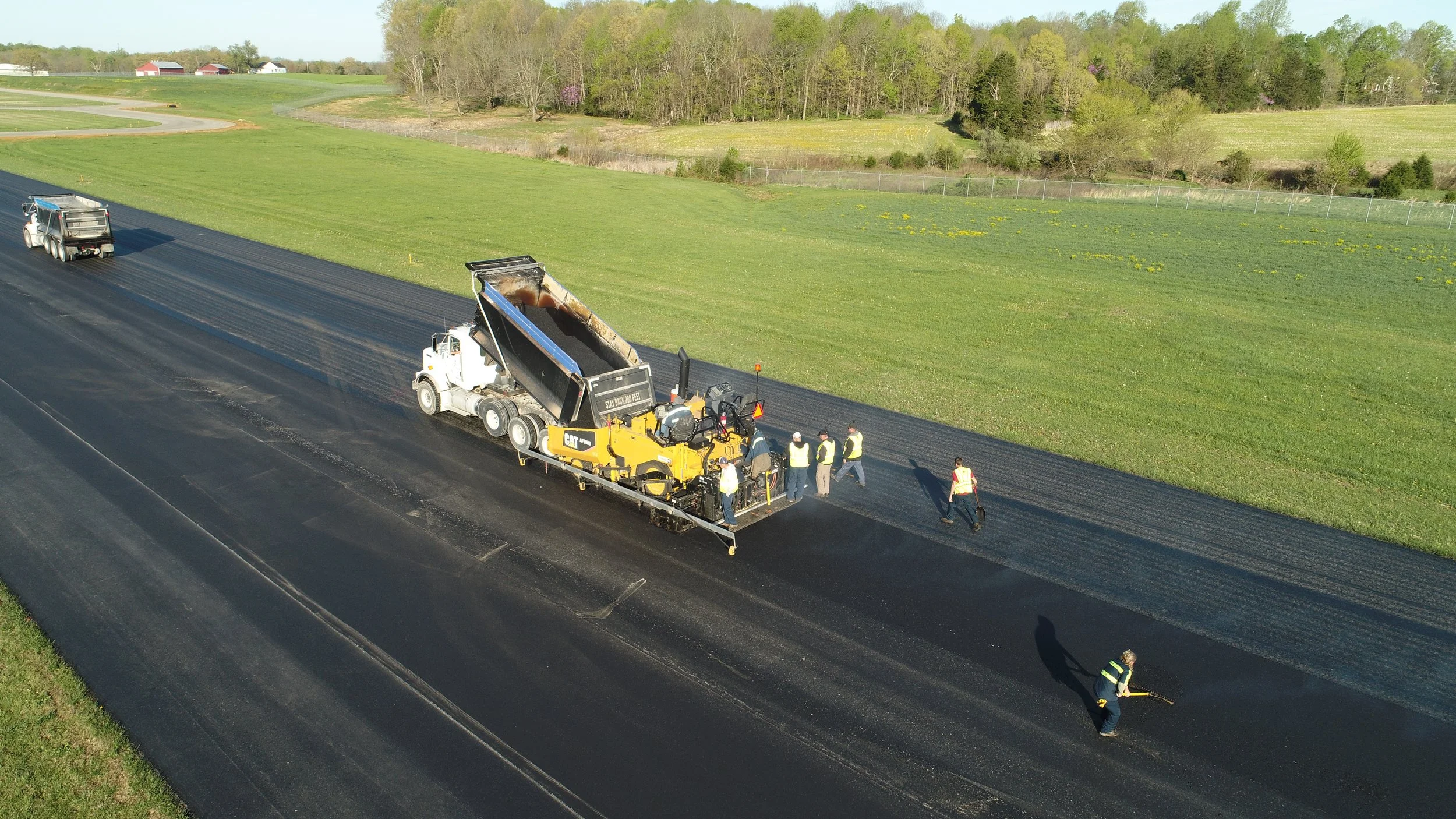
Award Winning Work — The Taylor County Airport pavement rehabilitation project received an Engineering Excellence Award in 2021 from the American Council of Engineering Companies.
At the Taylor County Airport, Palmer's work demonstrates how aviation engineering can extend well beyond a single project. Serving as the airport's prime consultant, Palmer has provided planning, environmental, pavement, design, and construction services across multiple improvements. The work has included a $2.15 million airport-wide pavement rehabilitation project, a 1,500-foot parallel taxiway extension, a new terminal building, and a 12-unit T-Hangar. Palmer has also developed the airport's Master Plan, Airport Layout Plan, and Exhibit A update and is supporting a drainage study evaluating infrastructure beneath the runway and taxiway.
Palmer's experience also includes addressing the infrastructure demands of major commercial airports. Since 2015, the firm has provided a wide range of services at Cincinnati/Northern Kentucky International Airport (CVG). Assignments have included pavement and parking improvements, roadway projects, drainage systems, traffic analysis, ground transportation facilities, and pedestrian improvements. Palmer has evaluated approximately 50 acres of parking facilities, supported the widening of Ted Bushelman Boulevard, designed improvements for the Ground Transportation Center, and performed traffic analysis for the proposed Consolidated Rental Car Facility. These projects require solutions that consider not only the infrastructure itself, but also the need to maintain airport operations and coordinate among numerous stakeholders.
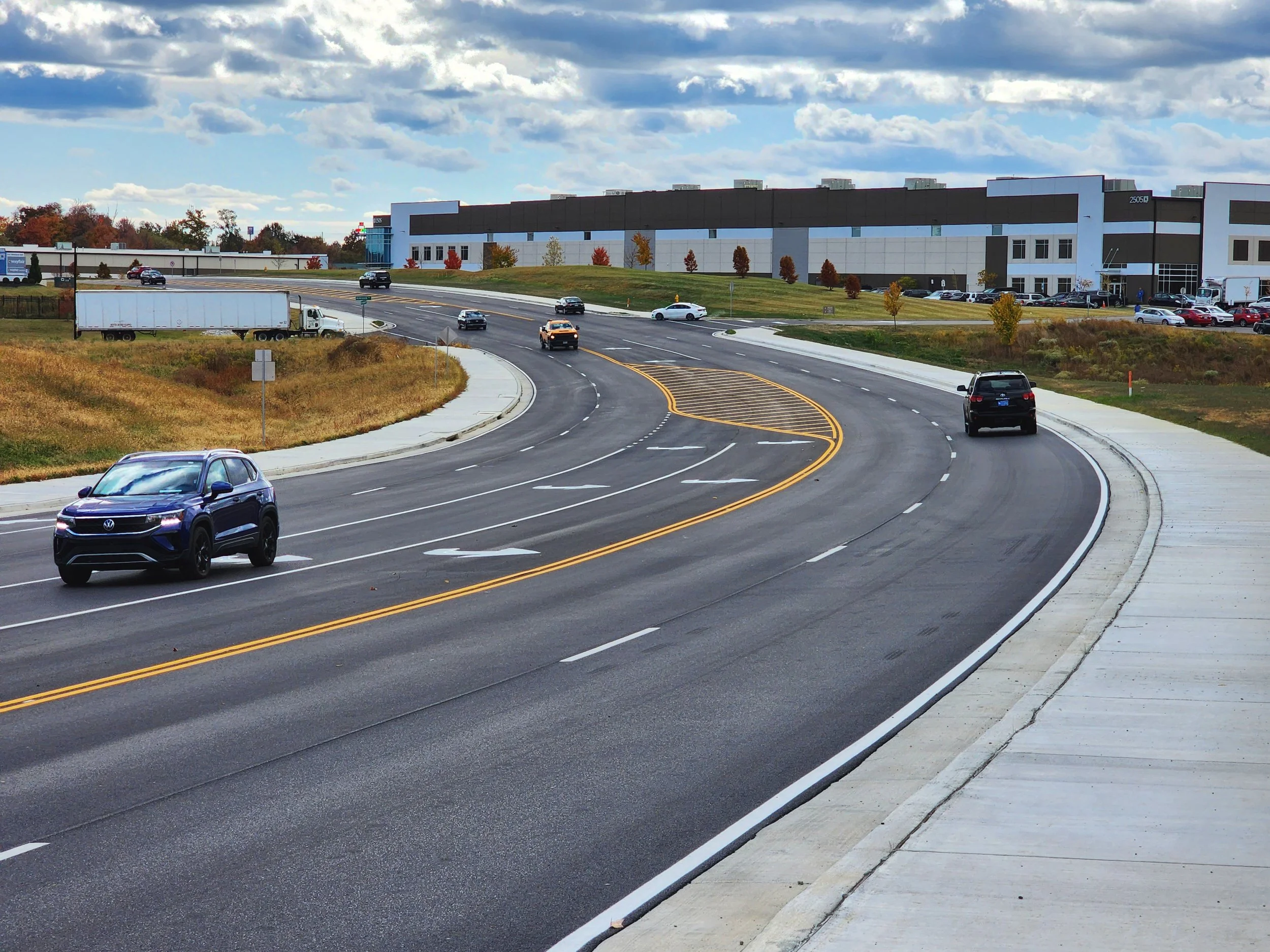
Ted Bushelman Boulevard Improvements at CVG
Palmer provided construction engineering and inspection services for the widening of approximately 0.61 miles of roadway from two to four lanes, including a center turn lane and RCUT intersection. Services included utility coordination, traffic control, field conflict resolution, materials testing coordination, and full construction administration to ensure compliance with CVG and KYTC standards.
Connecting Communities to Aviation
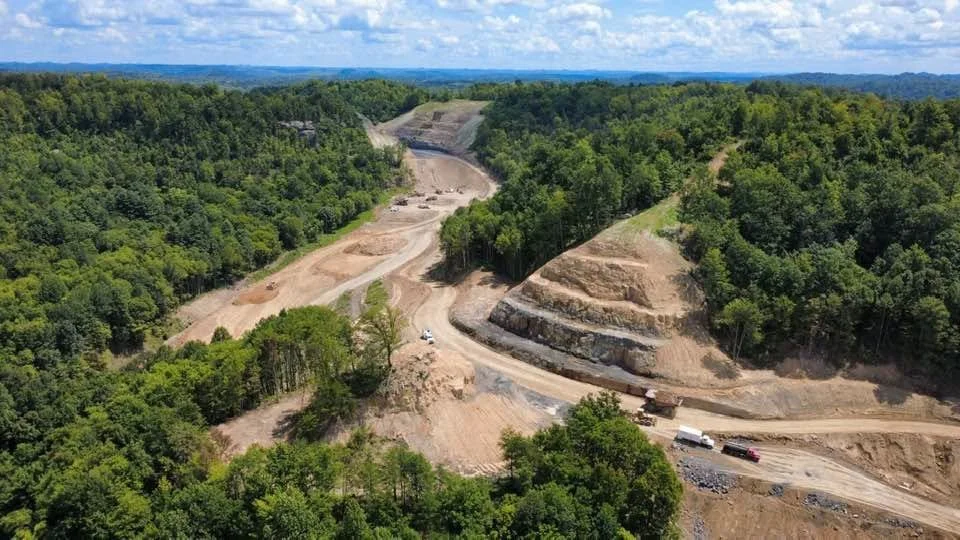
Wendell H. Ford Regional Airport Access Road — Construction is underway on a new, wider connection from KY 15 to the airport, featuring a less steep route, paved shoulders, and a new roundabout.
Airport infrastructure also includes the connections that make aviation facilities accessible to the communities they serve. In Perry County, a new roadway is being built to connect KY 15 to the Wendell H. Ford Regional Airport, replacing an existing route that is narrow, winding, and prone to slips and breaks. The new access will provide a less steep, wider route with paved shoulders and a roundabout at the top of the mountain—the first roundabout in Perry County.
Located directly across from the Coalfields Industrial Park, the new airport access also has the potential to support economic development beyond the airport itself. Improved infrastructure will help support manufacturing and packaging opportunities at the industrial park, job creation, and the movement of goods to markets around the world. The project is expected to be completed in August 2027, creating a stronger connection between the region's roadway, aviation, and economic development infrastructure.
Planning for What’s Next
At the Blue Grass Airport in Lexington, KY, Palmer's work has combined long-range planning with targeted infrastructure improvements. The team assisted with an update to the airport's Master Plan Study, supporting landside analysis and facility requirements while conducting 24-hour traffic counts at the terminal and adjacent roadways. Palmer coordinated the traffic analysis with the airport's commercial flight schedule to better understand peak conditions and also evaluated wayfinding signage as part of future terminal roadway planning. In separate work, Palmer evaluated pavement and stormwater systems at four T-Hangar sites, developed repair recommendations and cost estimates, and later submitted construction plans within two weeks after funding was secured.
Across these projects, Palmer's aviation experience reflects the multidisciplinary nature of airport infrastructure. Pavement, transportation, drainage, environmental considerations, planning, and construction all play a role in keeping aviation facilities operating safely and efficiently. Whether evaluating the condition of a runway, planning for future airport development, improving landside circulation, or overseeing construction, our team approaches each assignment with an understanding of how individual improvements contribute to the airport as a whole.
National Aviation Week is an opportunity to recognize the infrastructure behind every connection—from the roads that lead to an airport to the runways that keep aircraft moving—and Palmer is proud to help aviation facilities meet today’s needs while preparing for what’s ahead.
Source: Project details regarding the Wendell H. Ford Regional Airport access road were reported by WYMT.